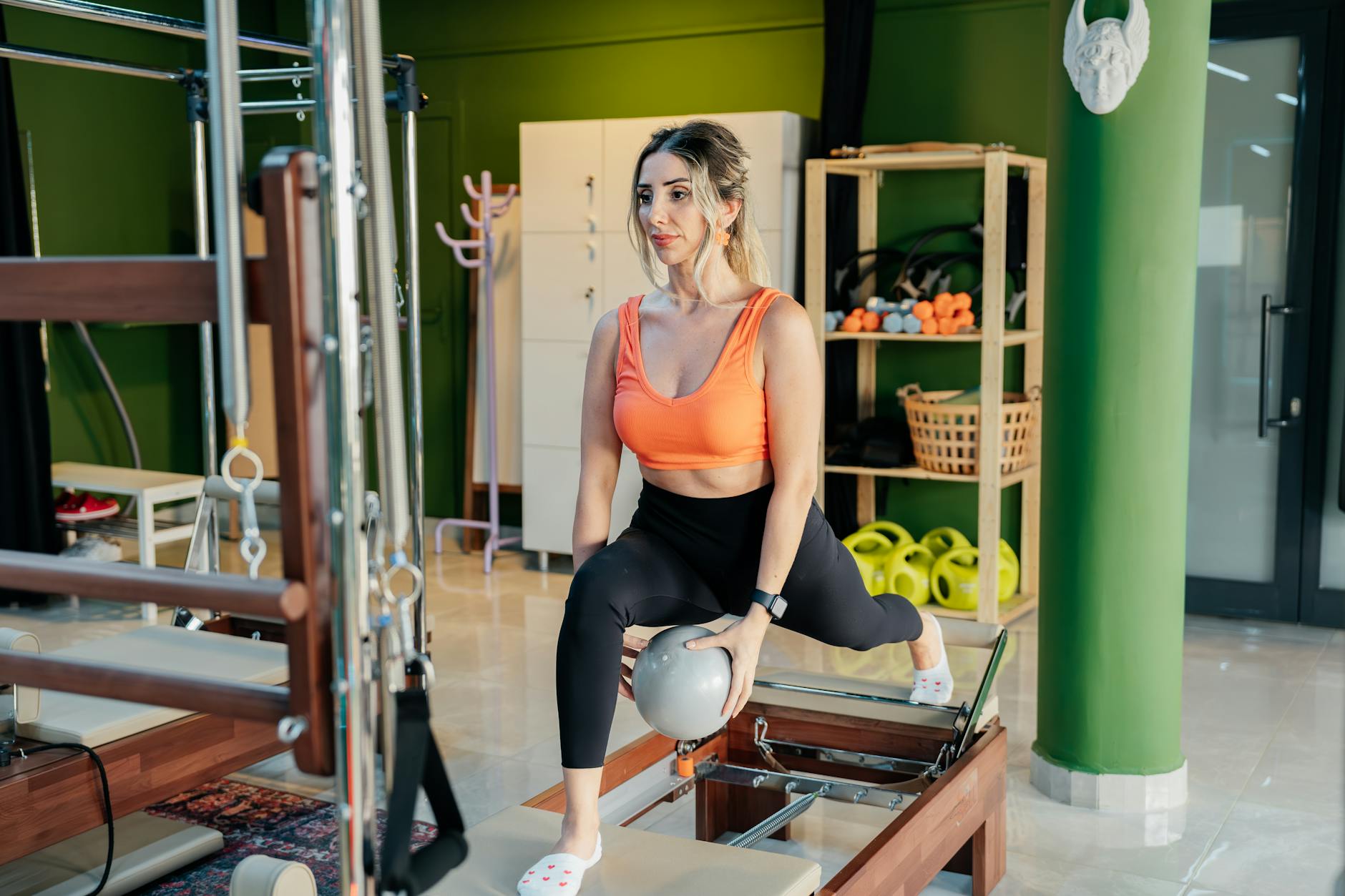
Presence in Classical Pilates isn’t a mood-it’s visible. It shows up in the body before anyone says a word.
I can see it in the Footwork. When someone is actually here-not running their morning backward in their head, not cataloguing what they forgot to do-their heels stay level on the bar without me cuing it. Their ribs don’t pop on the press out. The carriage moves at the same speed in both directions because they’re listening to it, not just riding it. Two repetitions is usually enough to know.
When someone isn’t here, the exercise still happens. The legs still push. The springs still compress and return. But the movement has a slightly mechanical quality, like a door swinging on a good hinge-functional, unremarkable, not quite alive. There’s nothing wrong with the form, exactly. It’s just that nobody’s home inside it.
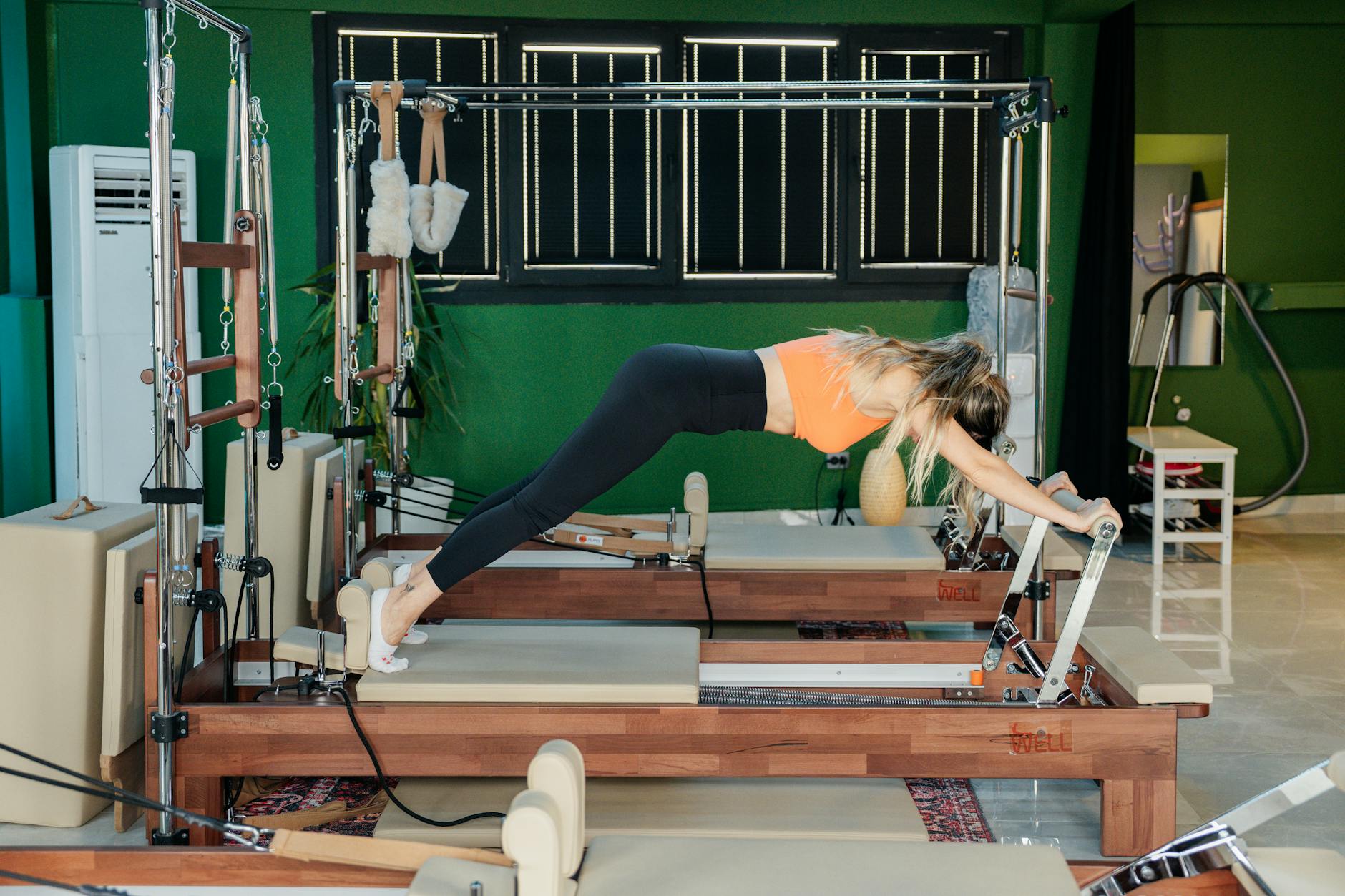
What I Say When I Notice It
I don’t say focus or be present. Those words don’t land anywhere useful. Instead I’ll name something specific-feel the back of your heel on the bar-and watch what happens. Usually the whole body reorganizes. The jaw softens. The breath finds its length again. One concrete thing to track is enough to pull someone back into the room.
This is what Pilates was designed to do. Not to quiet the mind through relaxation, but to occupy it completely-to give it so much precise, physical information to process that there’s simply no bandwidth left for anything else. The concentration principle isn’t a wellness add-on. It’s structural. Without it, you’re doing calisthenics on expensive equipment.
I think about this when I’m the one on the reformer, too. The days I most want to rush through a session are the days I most need to slow down inside the exercise I’m already in.