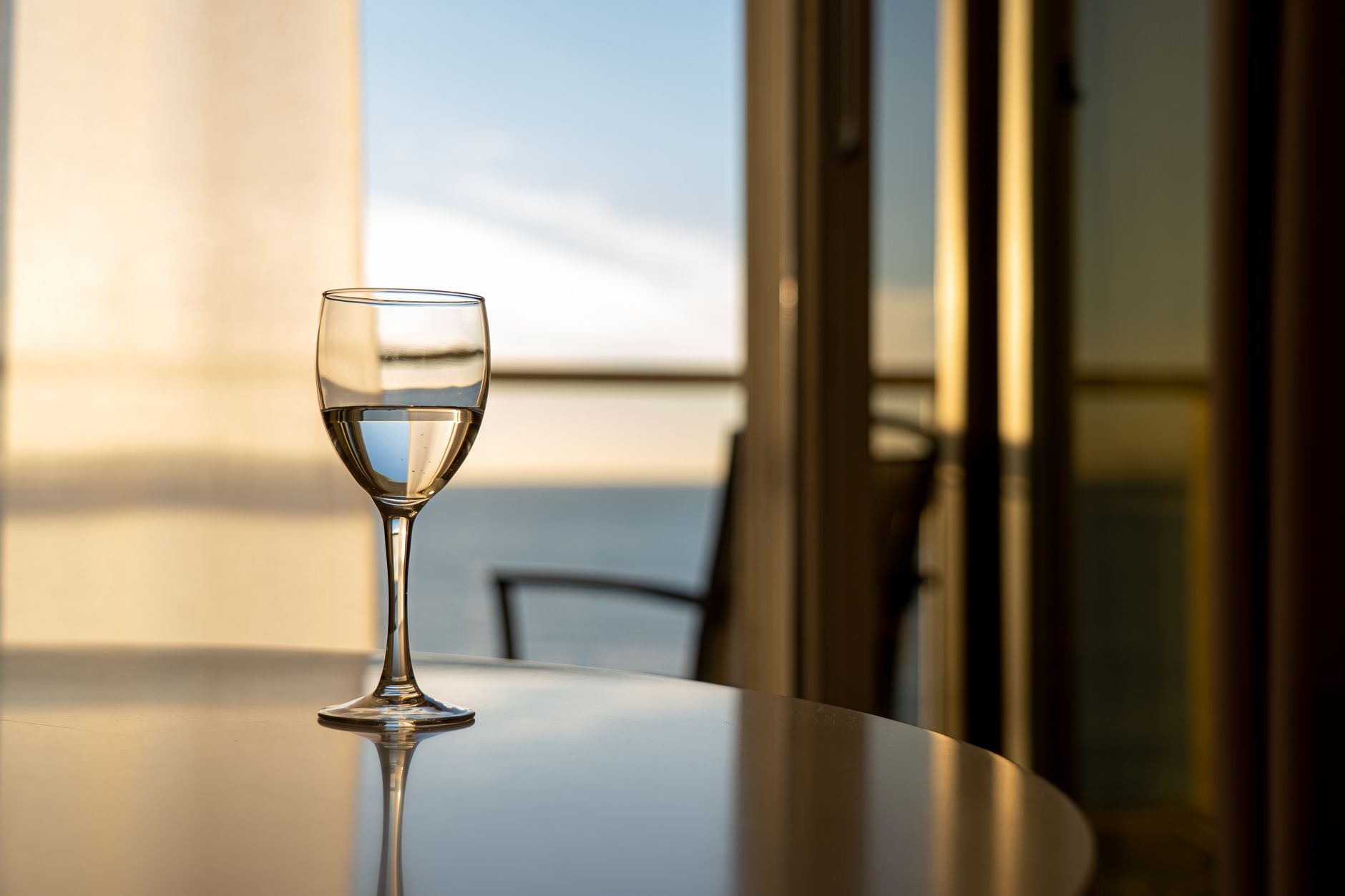
Connective tissue is roughly 70% water. That number matters when you’re asking your fascia, tendons, and spinal discs to load, lengthen, and recoil through a full Classical session. Dehydrated tissue does not glide. It grips.
This is not a wellness lecture. It’s something I noticed in my own body and confirmed by paying closer attention over time.
I started keeping a full glass of water on my nightstand — not a bottle, a glass, because I’m more likely to drink all of it in one go. Before my feet hit the floor, before coffee, before I look at my phone, I drink it. The whole thing. That’s it. That’s the habit.
What changed was subtle at first. The Roll-Up felt less like prying vertebrae apart. The Spine Stretch Forward had more give in the lumbar. The Footwork series, which I do first on the Reformer, stopped feeling like I was warming up a machine that didn’t want to start.
Why Classical Pilates Specifically
Classical work is sequenced deliberately. The order is not decorative — it builds on itself, each exercise preparing the body for the next demand. If you arrive already behind, already stiff in the places the sequence is designed to open, you spend the first third of the session catching up instead of working.
Spinal flexion and extension require hydrated discs. The rotation in the Short Box series, the articulation in the Short Spine Massage, the loading through the Long Stretch — none of it moves as intended through tissue that’s already in deficit.
Coffee first is a diuretic before it’s a stimulant. That’s a fact worth sitting with.
What I Actually Do
Glass of water before anything else. On days I teach, I drink another before I get on the equipment myself. Nothing exotic, nothing measured in ounces with an app. Just water, early, consistently.
The body you bring to the apparatus is already a result of the choices you made before you got there. This one is easy.