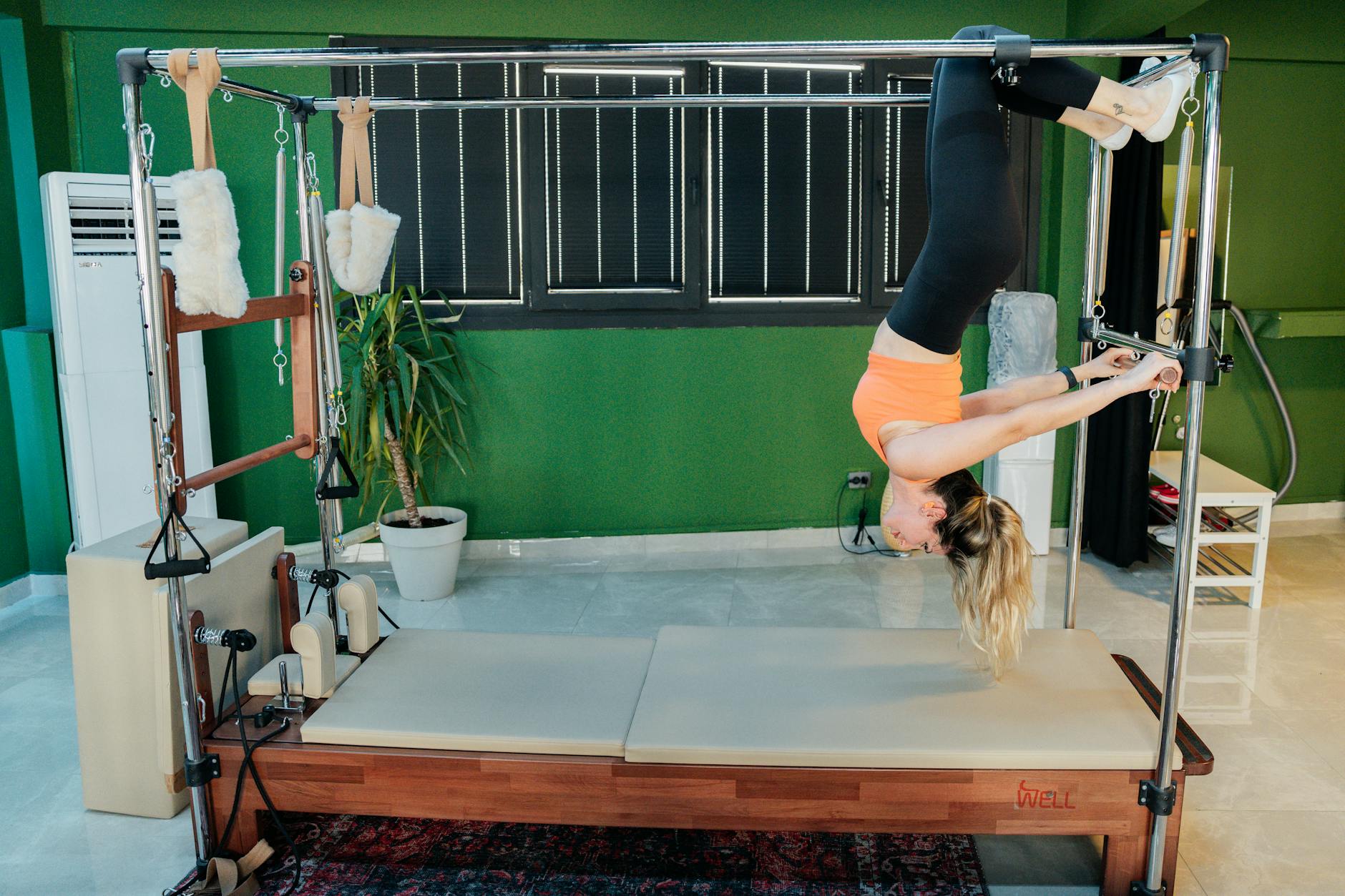
The rollback bar on the Cadillac gets underestimated almost every time. It looks gentle - a padded bar attached to two springs, an invitation to ease into spinal flexion. Beginners get placed there because the springs offer assistance on the way up. That part is true. What gets glossed over is that the same springs that help you up also demand everything from your powerhouse on the way down.
The rollback is not assistance work. It’s eccentric control work.
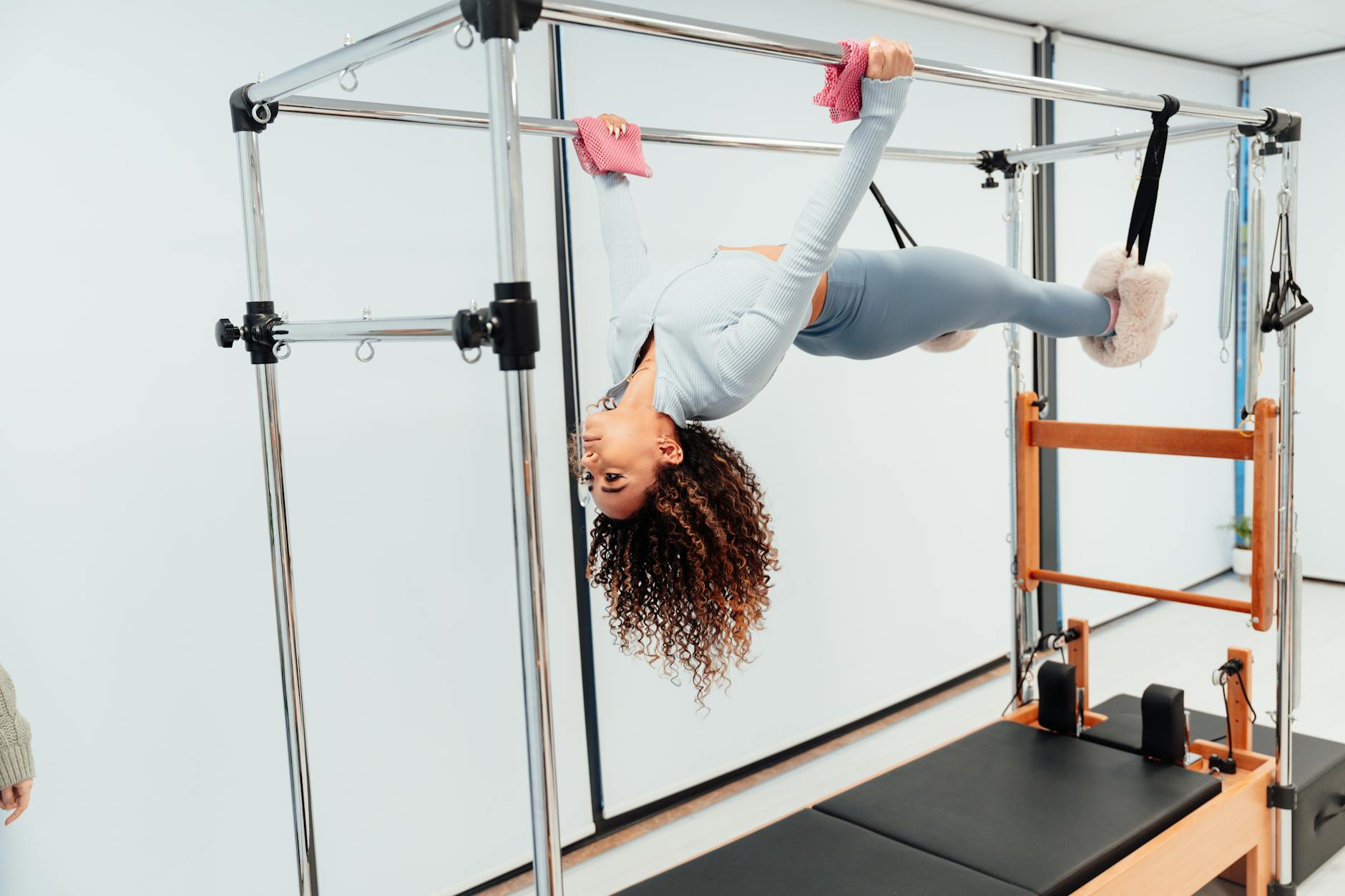
What the Springs Are Actually Doing
When you sit at the edge of the Cadillac with the rollback bar in both hands, springs attached overhead, the tension pulls the bar - and your arms - forward and up. As you articulate back toward the mat, you are working against that spring tension the entire way down. The abdominals, particularly the deep transverse layer, have to decelerate the descent vertebra by vertebra. Nothing about that is passive.
The common error is to let the spring do the lowering. The client leans back and the spring resistance disappears into momentum. The spine drops in chunks rather than peeling segment by segment. You can hear it sometimes - a dull thud as the lumbar hits the mat instead of meeting it.
The cue that tends to fix this: resist the bar away from your chest as you go back. That opposition - arms pressing forward, torso moving back - reactivates the work and slows the descent. It also opens the chest in a way that incidental rolling never does.
Why Sequencing Matters Here
In a classical Cadillac order, the rollback typically appears early, which contributes to its reputation as introductory material. But placement in a sequence isn’t the same as simplicity of demand. The Hundred appears first on the Reformer; no one calls it easy.
When the rollback bar is used correctly, it prepares the spine for the harder supine and hanging work that follows - the leg springs, the push-through bar, the tower work. It’s sequenced early because it establishes the baseline: can this person control spinal flexion under load? If they can’t, everything that follows will compensate around that gap.
The Detail Most People Miss
Foot position changes the exercise entirely. Feet flat on the mat with knees bent creates one relationship to the pelvis. Legs extended changes the hamstring demand and makes neutral pelvis harder to maintain during the rollback. Most group Cadillac sessions default to bent knees without explanation. Worth asking your teacher which variation you’re actually doing - and why.