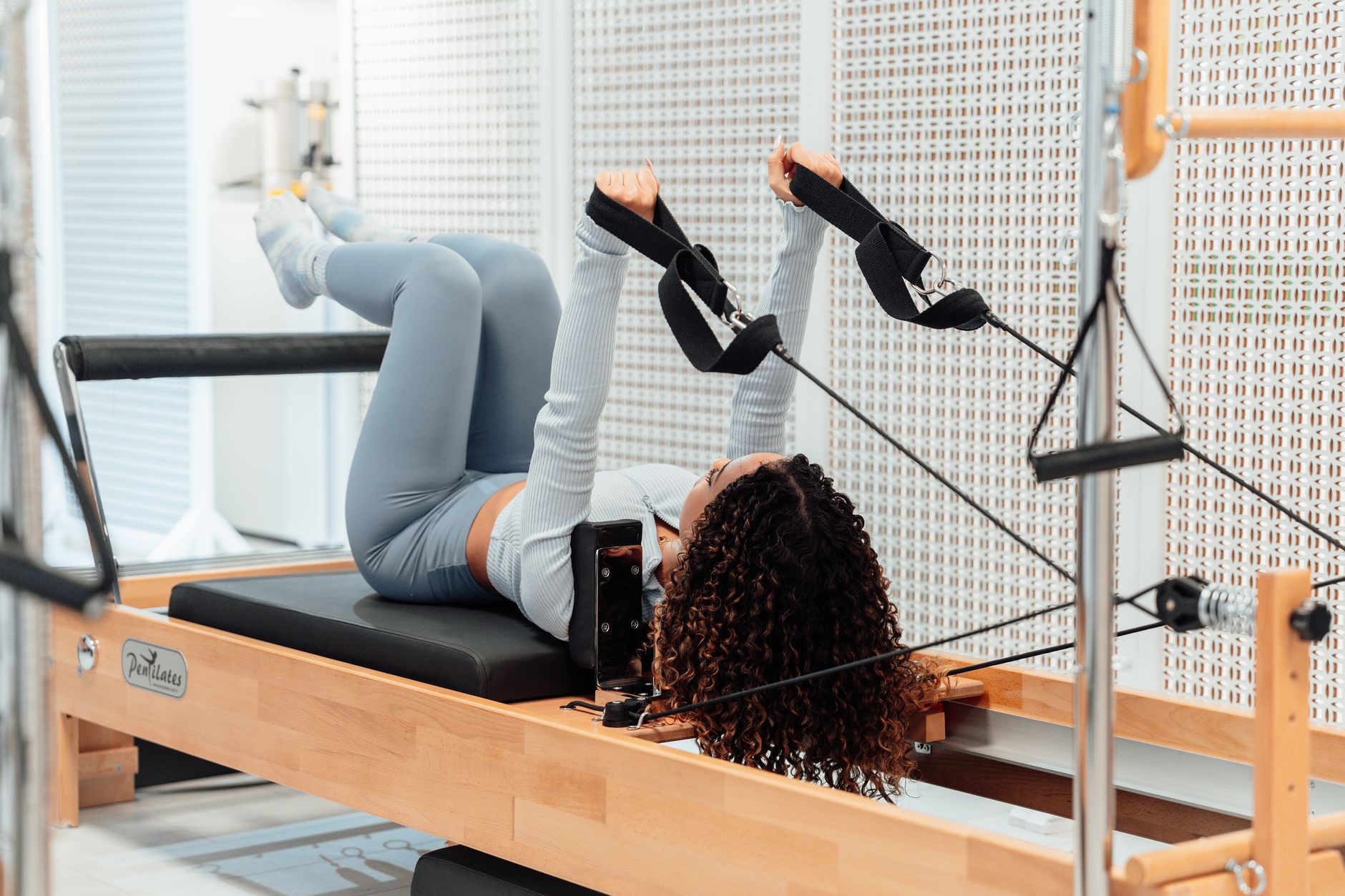
Elephant is one of the most underestimated exercises in the Classical Reformer order. It comes after the Footwork, after the Hundred, after a sequence of work that has already demanded coordination and stamina - and so when students step onto the carriage, hinge forward, and grip the bar, there is a tendency to exhale with relief. Finally, a moment to hang. That instinct is exactly what Elephant is designed to correct.
The setup is deceptively simple: standing on the carriage, heels against the shoulder rests, hands on the foot bar, spine rounded in a C-curve, head dropped. From there, you push the carriage back with your feet and draw it in again. The springs resist you both ways. What looks like a hamstring stretch or a spinal decompress is, in reality, a full-body scoop exercise that demands the abdominals stay lifted and scooped throughout every inch of the carriage’s travel.
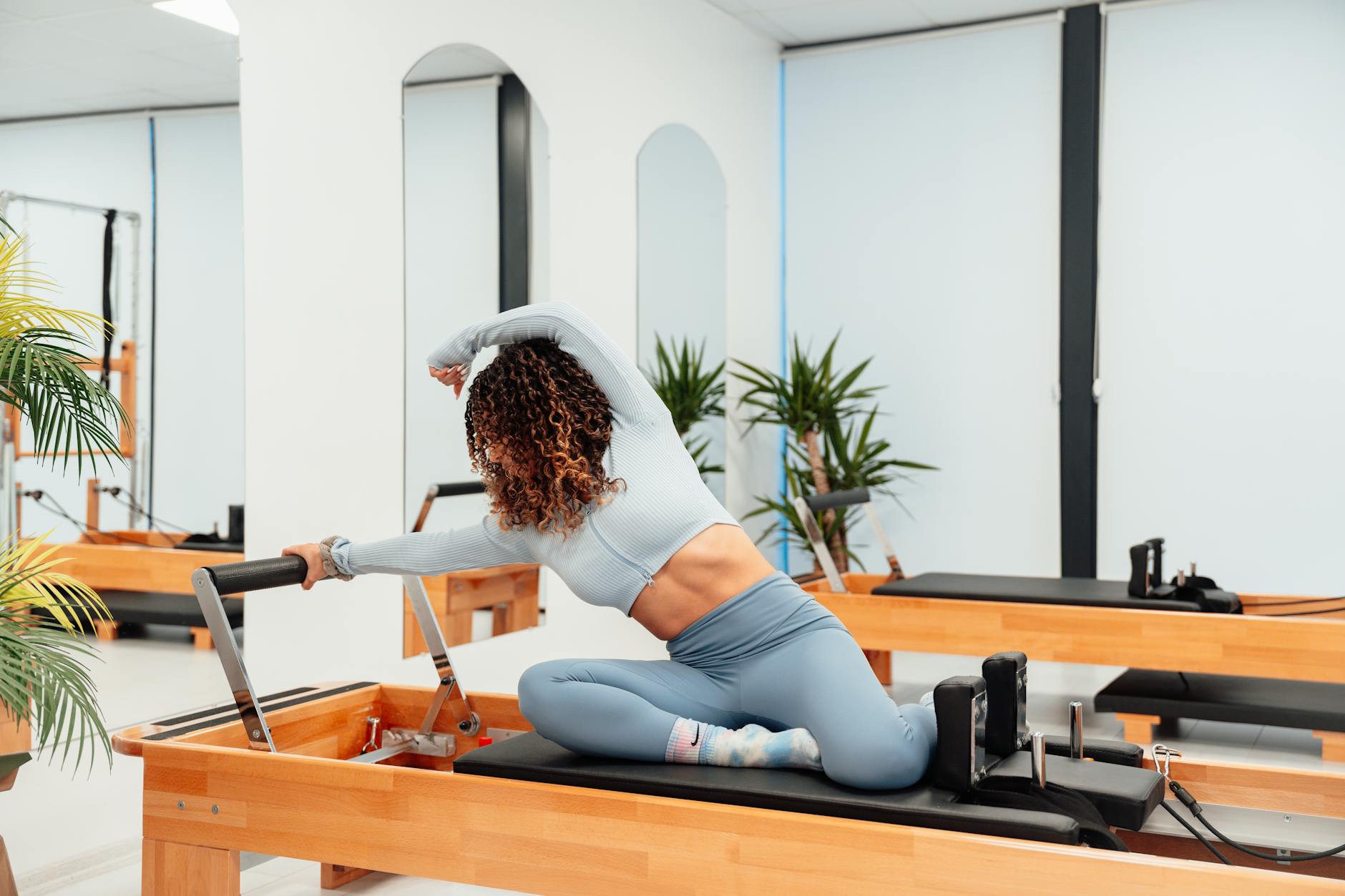
The Scoop Is the Whole Point
The lumbar spine has to stay flexed - not passively hanging, but actively held in opposition to the weight of the pelvis pulling it toward extension. If you lose the scoop, the lower back drops, the hips hike, and the exercise becomes something else entirely: a hip hinge with tension, which is not the intent.
The cue that matters most here is the one connecting the lower abdominals to the resistance of the bar. As the carriage moves away, you’re not just pushing with the legs - you’re resisting the pull on the spine by deepening the contraction at the low belly. The hamstrings lengthen, yes. But they lengthen because the pelvis is being held from above, not because you let go.
What the Foot Placement Reveals
The heels press into the shoulder rests. This is not incidental. That contact point gives the body feedback about where the pelvis is in space. When students lose the scoop and the carriage slides out too easily, you’ll often see the heels lift - the body quietly redistributing load away from the challenge. Keeping the heels grounded and the weight even across the foot is part of sustaining the correct relationship between the legs and the spine.
The spring load matters here too. Elephant is typically done on two to three springs. Too light and there’s no resistance to push into; too heavy and the movement deteriorates into bracing rather than lengthening.
Elephant earns its place in the order not because it offers recovery but because it asks the body to maintain integrity after it’s already been tested. The exercise reveals what the earlier work built - or didn’t. That’s not a rest. That’s a reckoning.