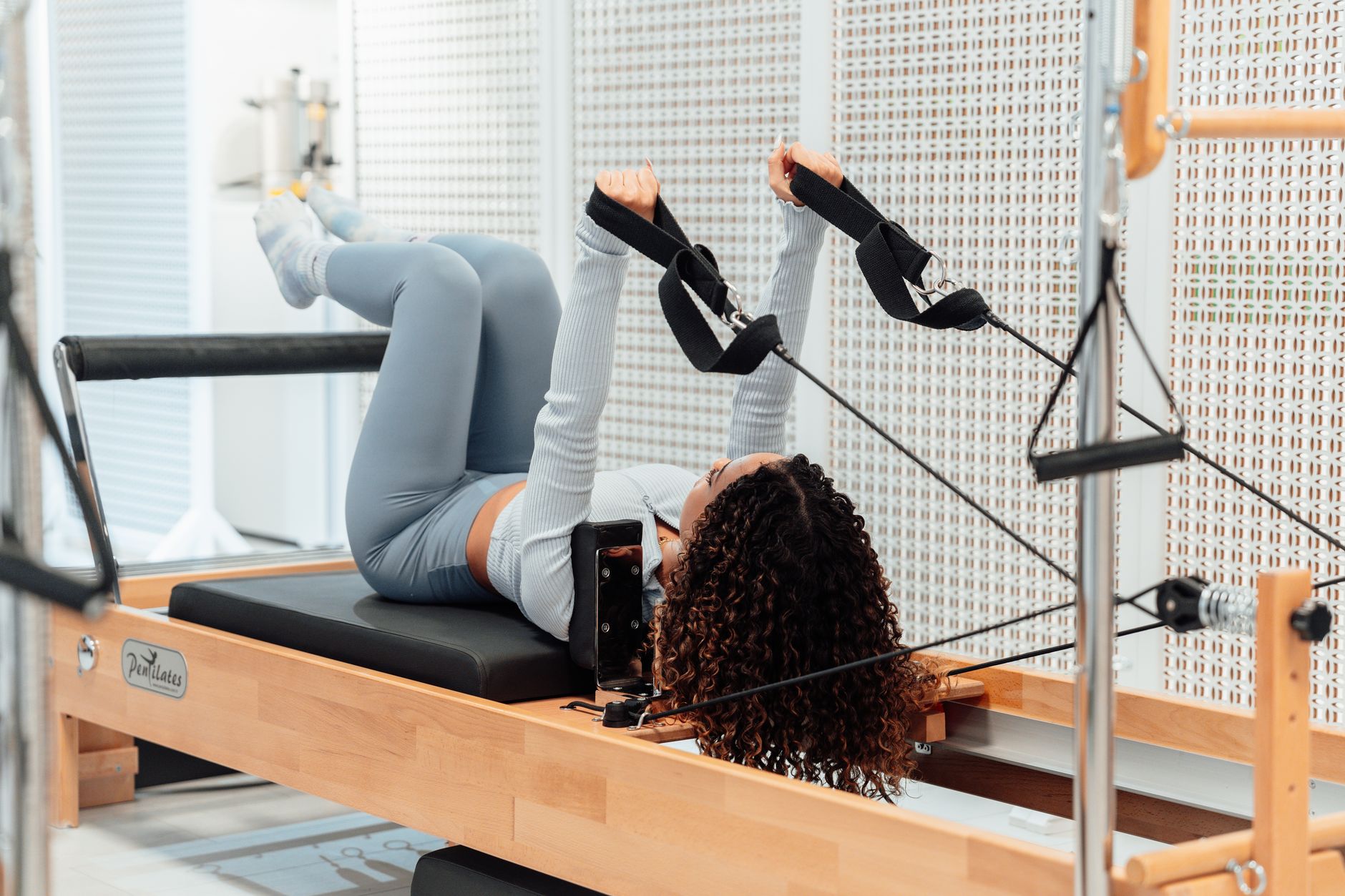
Most students first encounter the Elephant and immediately lean into it like a doorway stretch after a long flight. The heels drop toward the footbar platform, the head hangs, the hamstrings sigh with relief. It feels productive. It is not what the exercise is for.
The Elephant is the fourth exercise in the standing repertoire on the Reformer, and it follows the Long Stretch Series for a reason. By the time you arrive at the Elephant, your powerhouse should already be working. The Elephant does not let you start over.
The Elephant is a powerhouse drill wearing the costume of a stretch.
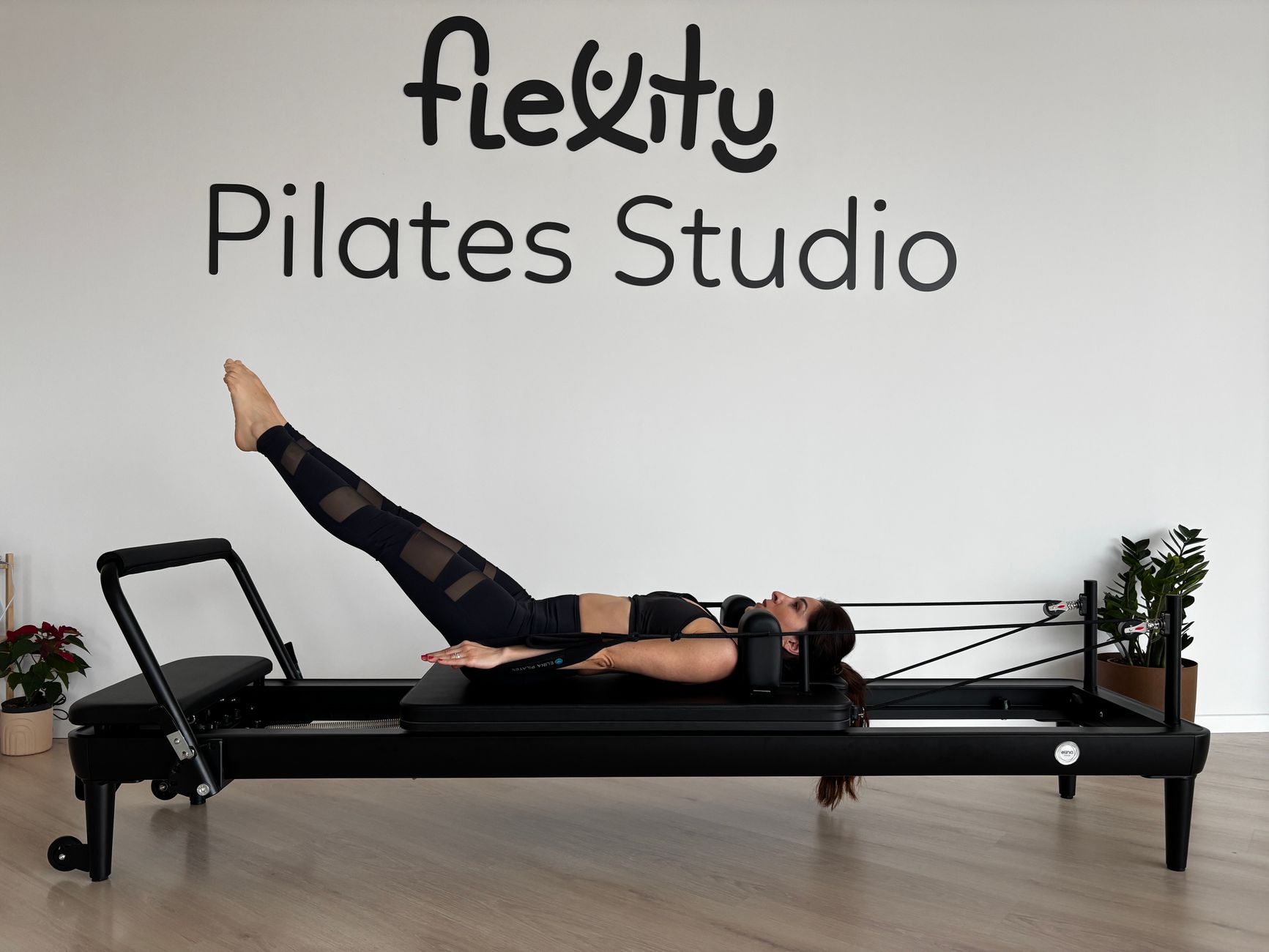
What the Shape Actually Requires
The setup is specific: hands on the footbar, heels lifted, hips high, spine long. Not rounded into a C-curve, not flat like a tabletop - long. The line from wrist to hip should have intention in it. The carriage moves by pulling the abdominals up and in, not by pushing through the legs or swinging the weight of the pelvis backward.
The hamstrings are lengthened, yes. But they are not the point. They are incidental to what the abdominals are doing. When the carriage draws in, it is the deep stabilizers firing, not momentum. When it returns, it returns with control, not recoil.
If the heels drop and the weight shifts back onto the platform edge, the exercise collapses into passive traction. The reformer is doing the work. That is a different thing entirely.
Why the Lifted Heel Matters
The heel lift is not a modifier or a warm-up compromise. It loads the intrinsic foot and calf, keeps the posterior chain engaged rather than slack, and prevents the student from hanging into the stretch rather than working through it. It also makes cheating harder. A dropped heel shifts the center of gravity and masks what the pelvis is or is not doing.
In Classical Pilates, exercise design is rarely accidental. The lifted heel is part of the apparatus logic.
The Transition Tells You Everything
Watch what happens when students move from the Elephant into the next exercise. If they have been genuinely working the powerhouse, the transition is organized - weight shifts, hands move, the body remains connected. If they have been stretching, there is a reset, a pause, a moment of gathering themselves back.
The Elephant reveals whether the preceding work landed. That is exactly what it is designed to do.