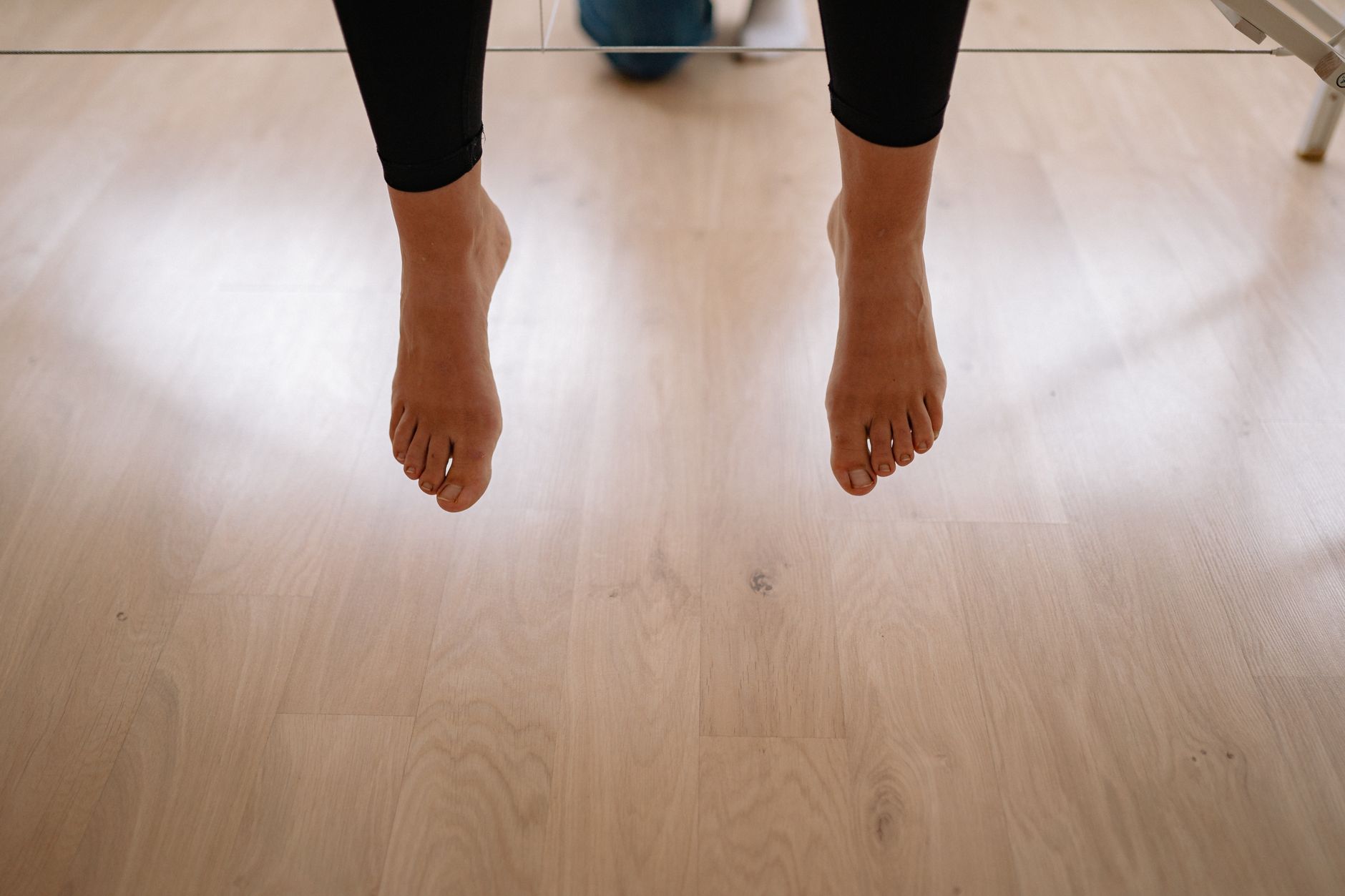
Proprioception starts at the sole of the foot. Before you touch the footbar, before your hands find the straps, before you’ve even thought about your powerhouse, your feet have already sent a report up the chain. The problem is that most people’s feet have been inside shoes for so long that the report is garbled at best.
The plantar surface of the foot contains a dense concentration of mechanoreceptors - sensory receptors that respond to pressure, vibration, and positional change. When those receptors are functioning well, they feed the nervous system accurate information about ground contact, weight distribution, and postural load. When they’re underused, padded into silence by thick-soled shoes and sedentary habits, the system upstream has to guess. The ankles compensate. The knees compensate. Eventually something in the lumbar spine compensates, and that’s usually when someone walks through the studio door saying their back hurts.
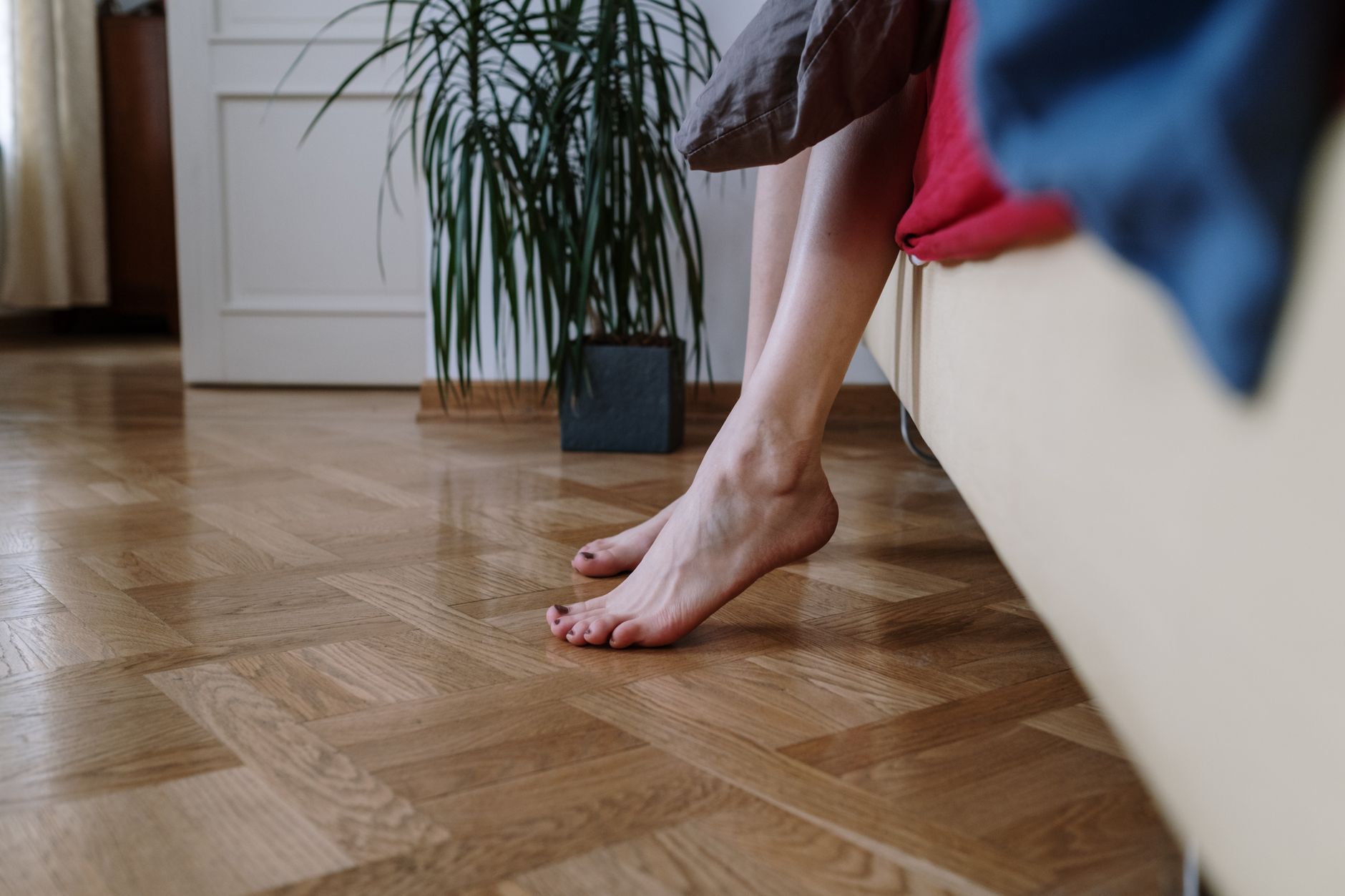
What to Do About It Before You Get on the Equipment
Spending two or three minutes on the floor before class is not warming up in any athletic sense. It’s calibration. Standing barefoot on a firm surface and shifting weight slowly from heel to ball to lateral edge to medial arch wakes up exactly the sensory input that footwork on the Reformer is designed to reinforce. You’re not stretching anything. You’re reminding the nervous system what the ground feels like.
This is one reason Classical Pilates has always been practiced in bare feet or light grip socks rather than trainers. The feedback loop between foot and brain matters. Covering that loop with cushioning doesn’t protect you - it just delays the problem.
The Footwork Series Is Not Leg Day
The Footwork series on the Reformer is often treated as a lower-body warm-up, a way to pump blood into the legs before the harder work begins. That reading misses the point. Footwork is proprioceptive training as much as it is strength or mobility work. The precision of heel placement in Pilates stance, the controlled articulation through the metatarsals in the calf raise, the demand for even pressure across all five toes in parallel - these are not arbitrary. They’re asking the foot to be specific.
When a client rushes through footwork, you can see it: the weight dumps to the outer heel, the big toe lifts, the knee tracks vaguely somewhere in the vicinity of the second toe. The foot is producing noise instead of signal.
Off the equipment, the single most useful thing most practitioners could add to their recovery routine is time spent barefoot on uneven surfaces - grass, gravel, a slightly cambered sidewalk. Not for any mystical grounding reason, but because varied terrain demands varied mechanoreceptor response. The foot gets to do its actual job. By the time you’re back on the Reformer, the conversation between sole and nervous system is already underway.