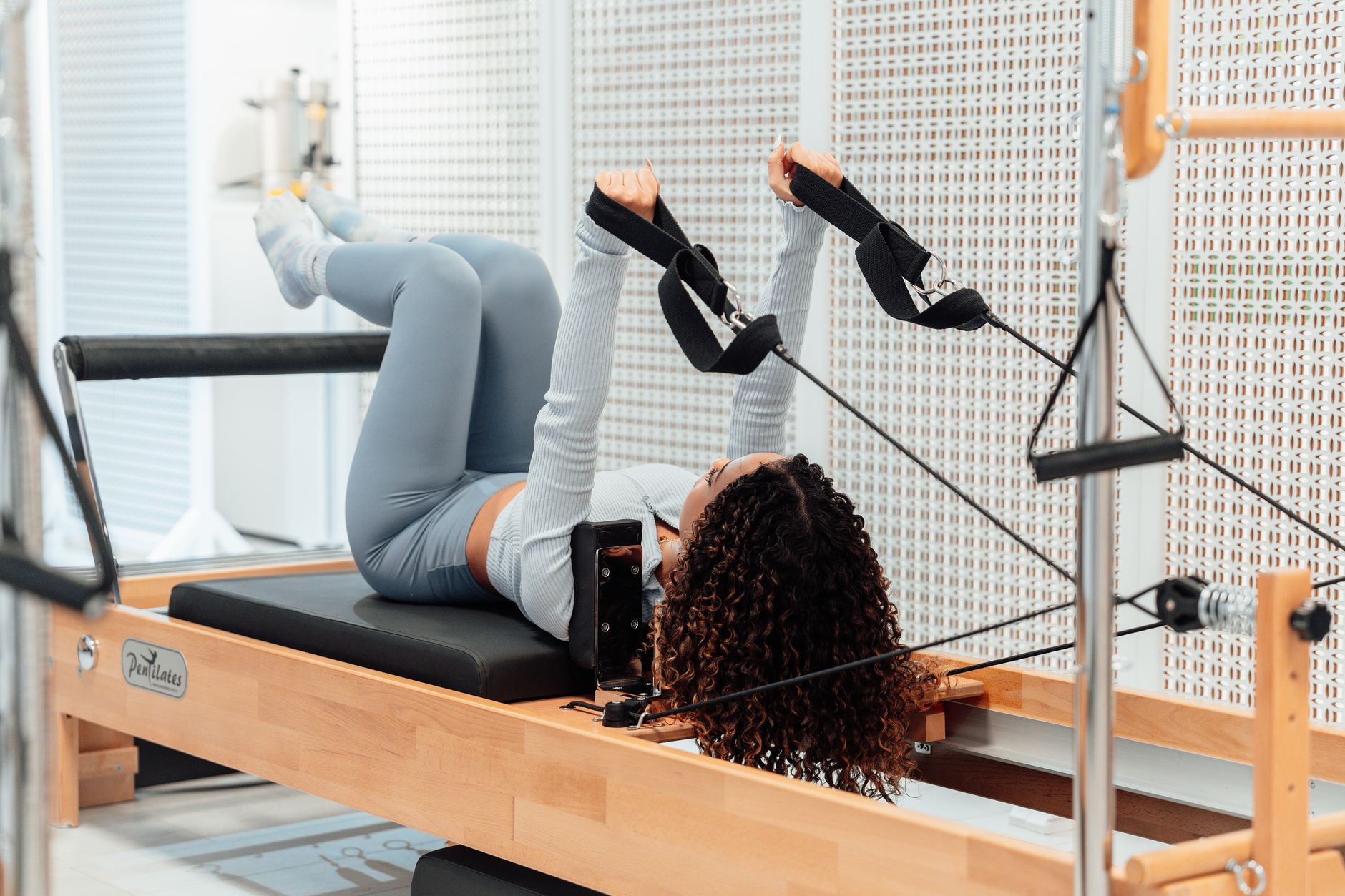
The Knee Stretch Series comes late enough in the Reformer order that your body has already warmed up, already been asked to organize itself. And then it asks you to do something that looks simple - kneel, hold the bar, round or arch, and push the carriage out with your legs. What actually happens in those three variations tells you exactly where your powerhouse has been hiding.
The setup is unforgiving in a useful way. You’re on your knees on the carriage, hands on the footbar, and the only thing keeping you from folding or flying apart is the abdominal connection you’ve either built or haven’t. There’s no lying down, no headrest, no support from the floor beneath your feet. The springs pull the carriage back; your legs push it out. In between those two forces is you.
Round Back, Flat Back, and the One That Comes Last
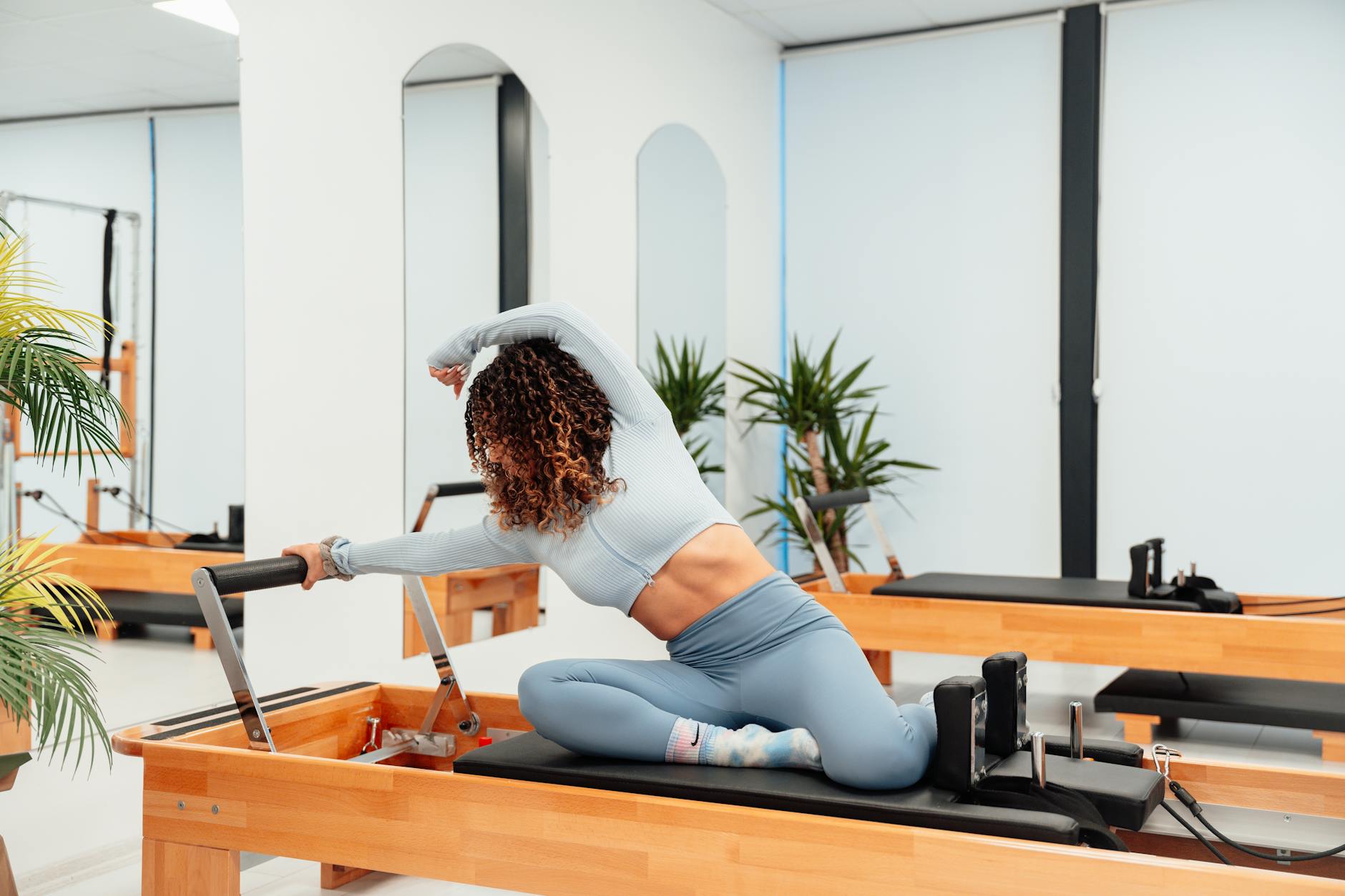
The first variation - Round Back - is where Joseph Pilates put the scoop front and center. The lumbar spine flexes, the tailbone drops, and the abdominals have to lift and hold that curve while the legs pump. If the lower back collapses into extension the moment the carriage moves, the abs have checked out. You’ll feel it immediately, or your teacher will see it immediately. There’s no ambiguity.
Flat Back shifts the demand. Now the spine holds a long neutral line - not collapsed, not gripped - while the hips hinge and the legs do their work. The tendency here is to let the lumbar dump into a sway as the carriage goes out. Preventing that requires the same deep stabilizers that the Stomach Massage Series has been training, just in a completely different orientation relative to gravity.
The third variation - sometimes called Knees Off - is where the series earns its reputation. Both knees lift one inch off the carriage, the round-back position is held, and the legs continue to pump. That one inch of lift requires the lower abdominals to fire in a way the first two variations can suggest but never demand. It’s brief. It’s clarifying.
What the Spring Tension Is Actually Doing
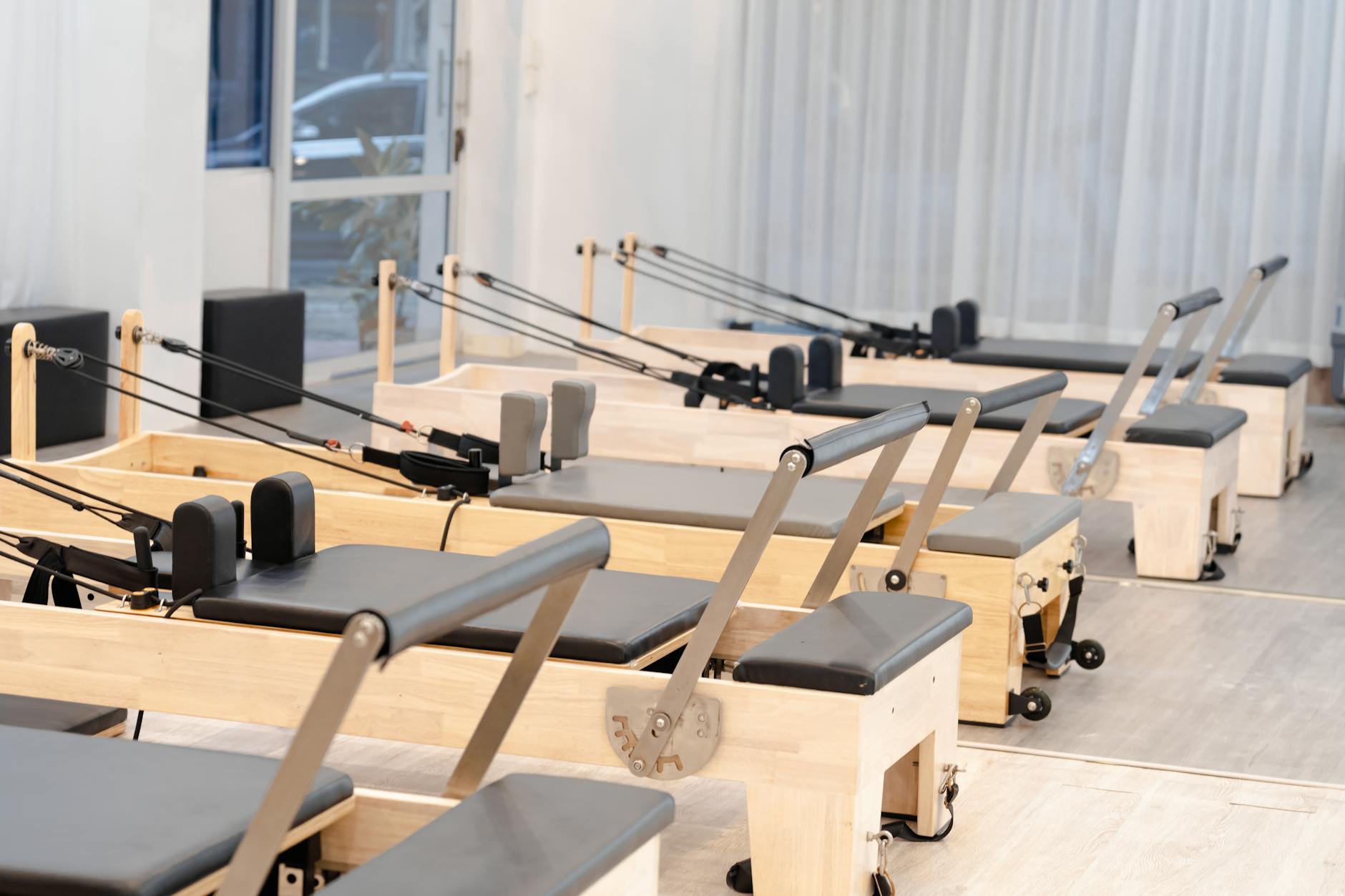
This series is typically taught on two to three springs, heavy enough to provide real resistance on the return. That return - when the carriage comes back in - is not a rest. The eccentric control of the legs against the springs is where a lot of the work lives, and a lot of people let it go. The carriage should come home under your direction, not the spring’s.
If you’re rushing the return, you’re skipping half the exercise.
The Knee Stretch Series is not complicated. It has no dramatic range of motion, no balance challenge that photographs well. What it has is honesty - a direct line between what your center is doing and what your body shows. Three variations, done well, back to back, and you know something true about where you actually are.