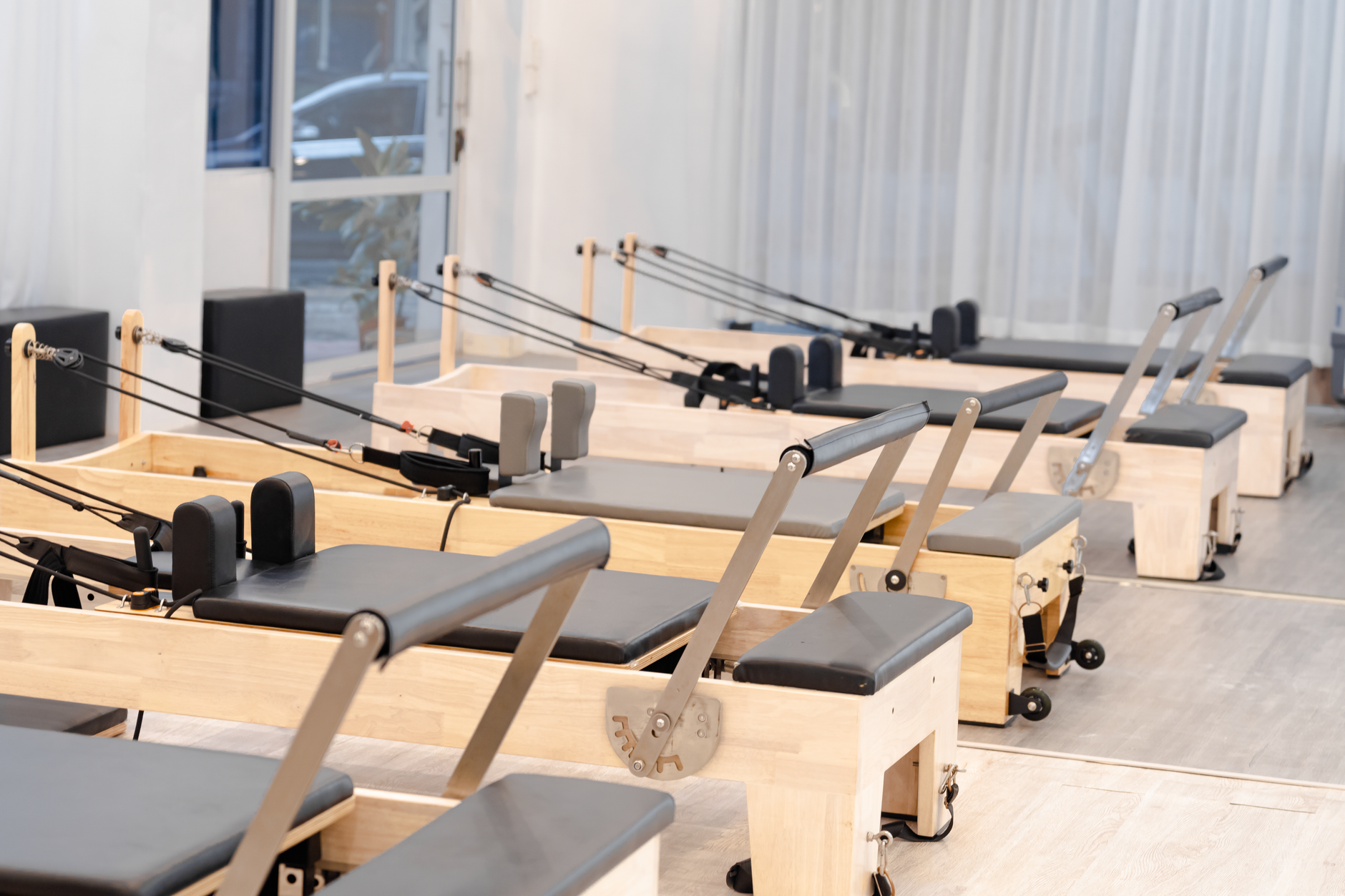
Pull Straps on the long box looks like a back exercise. The body is prone, the arms pull backward, the spine extends — easy to conclude that the goal is spinal extension and a stronger back. That conclusion misses most of what the exercise is doing.
The work begins in the abdominals. Prone does not mean the powerhouse gets a rest. If the deep abdominals are not engaged before the arms move, the lumbar spine will compress instead of extend, and the mid-back never gets the chance to open. What looks like a back problem in Pull Straps is almost always an abdominal problem.
What the Straps Are Actually Testing
The straps in Pull Straps are not there to create resistance for the arms. They’re there to reveal whether the shoulder girdle can move independently of the neck and upper traps. Most people, when asked to pull something toward their hips, recruit the upper trapezius immediately. The neck shortens, the chin juts, and the thoracic spine loses whatever extension it briefly found.
The cue that changes everything is simple: lengthen the back of the neck before the arms do anything. Not a tuck, not a press - a lengthening. When the cervical spine is long and the gaze is down, the mid-trapezius and rhomboids have a fighting chance to do their job. Without that, Pull Straps becomes a neck compression exercise with arm movement attached.
The hands should stay low throughout the pull - below the hips, moving toward the feet. If the hands rise, the upper traps have taken over. That’s the tell.
Why Classical Sequencing Puts This Where It Does
On the long box, Pull Straps follows Pulling Straps (sometimes called the same exercise in two positions) and leads into T-Pull. The sequencing is deliberate. By the time a student reaches T-Pull, the nervous system should already know how to stabilize the shoulder girdle against load. Pull Straps builds that pattern.
Skipping the setup - or treating the exercise as a casual backbend - means arriving at T-Pull with no foundation. The arms splay, the thoracic spine collapses, and the student wonders why their shoulders feel worse after Reformer work, not better.
The long box series is not restorative. It is integrative. Pull Straps, done with precision, asks the front body to hold while the back body opens - and that coordination is exactly what transfers to every standing and seated exercise in the system.