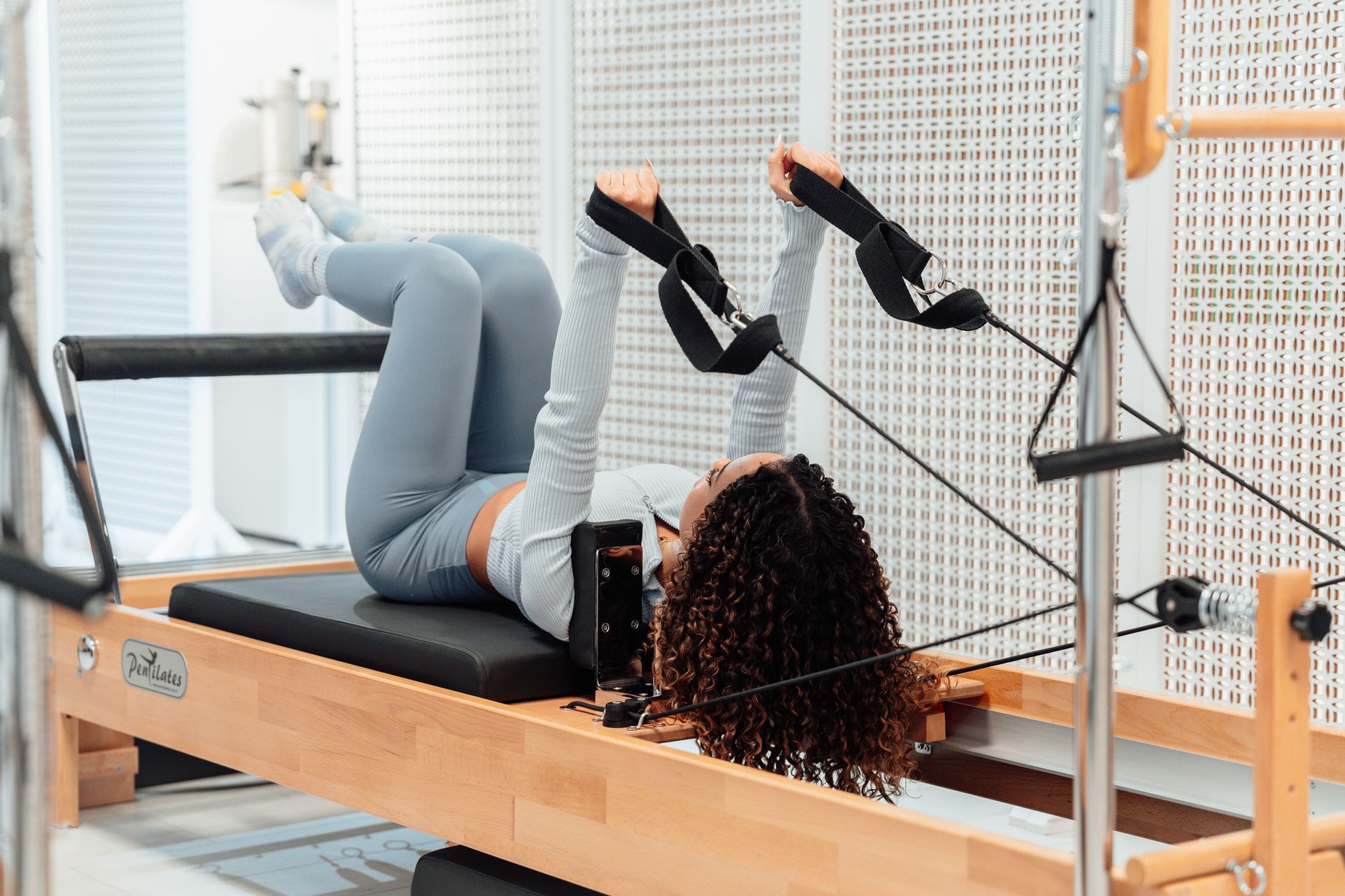
Most people underestimate the long box the moment they lie face down on it. The position feels passive - you’re prone, the straps are in your hands, the movement looks simple enough from across the room. But Pulling Straps is one of the most diagnostic exercises in the Classical Reformer repertoire, and what it reveals about a person’s back extensors, shoulder mechanics, and breath patterning is difficult to fake.
The prone position removes every compensation the upright body relies on.
When you’re lying face down, you lose the postural scaffolding that standing and sitting provide. The hip flexors can’t grip the front of the pelvis for stability. The neck can’t jut forward to lead the movement. The lats have to actually work - not just create the appearance of working. Whatever the back body has been doing in theory now has to perform in practice.
What the Straps Are Testing
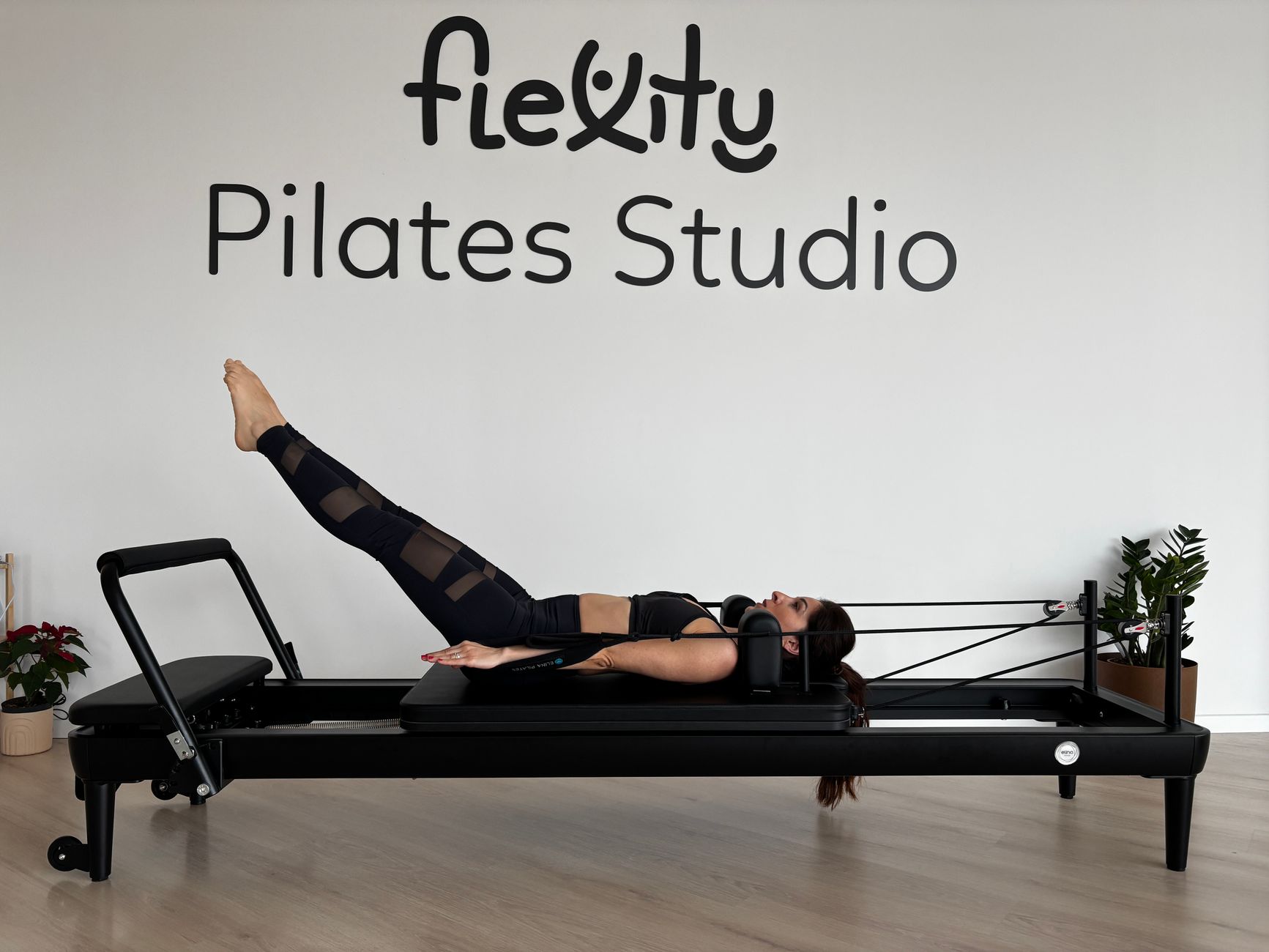
In Pulling Straps, the arms start extended overhead, and the movement pulls them down alongside the body while the chest lifts. The spring resistance is relatively light, which is part of the point. This is not a strength exercise in the way a row or a deadlift is a strength exercise. It’s a coordination exercise with a strength component - and that ordering matters.
The mistake most people make is initiating with the arms rather than the posterior chain. You see the hands pull first, the elbows bend early, and the chest lifts as a consequence rather than a cause. In Classical Pilates, the sequence runs the other way: the thoracic extensors begin the lift, the scapulae draw down and together, and the arms follow that posterior chain engagement rather than leading it. When the sequencing is correct, the exercise feels almost effortless. When it’s reversed, people report burning in the traps and tension in the neck - exactly the structures that weren’t supposed to be working.
The follow-up exercise, T-Pull, shifts the arms into a “T” position and makes any asymmetry in the shoulder girdle immediately apparent. One side will almost always lag, usually the dominant side, which tends to be overused and undercontrolled.
The Breath Problem Nobody Talks About
The prone position compresses the anterior ribcage against the box. That restriction forces a practitioner to breathe into the back and sides of the ribcage - a skill that most people arrive without having practiced. Instructors who watch closely will see breath simply stop during the lift phase, which collapses the internal pressure system the movement depends on.
Teaching someone to maintain a three-dimensional breath while their thoracic spine is extending against spring resistance is genuinely difficult work. It’s also the work.
Why This Belongs in Every Intermediate Practice
Pulling Straps sits in the intermediate Reformer order for a reason. It assumes that a student has already developed basic scapular stability, some facility with thoracic extension, and enough body awareness to distinguish arm movement from back movement. In practice, many people who have been doing Pilates for years arrive at the long box without those foundations clearly in place - and the exercise exposes that quickly and without drama.
The long box doesn’t argue with you. It just shows you what’s there.