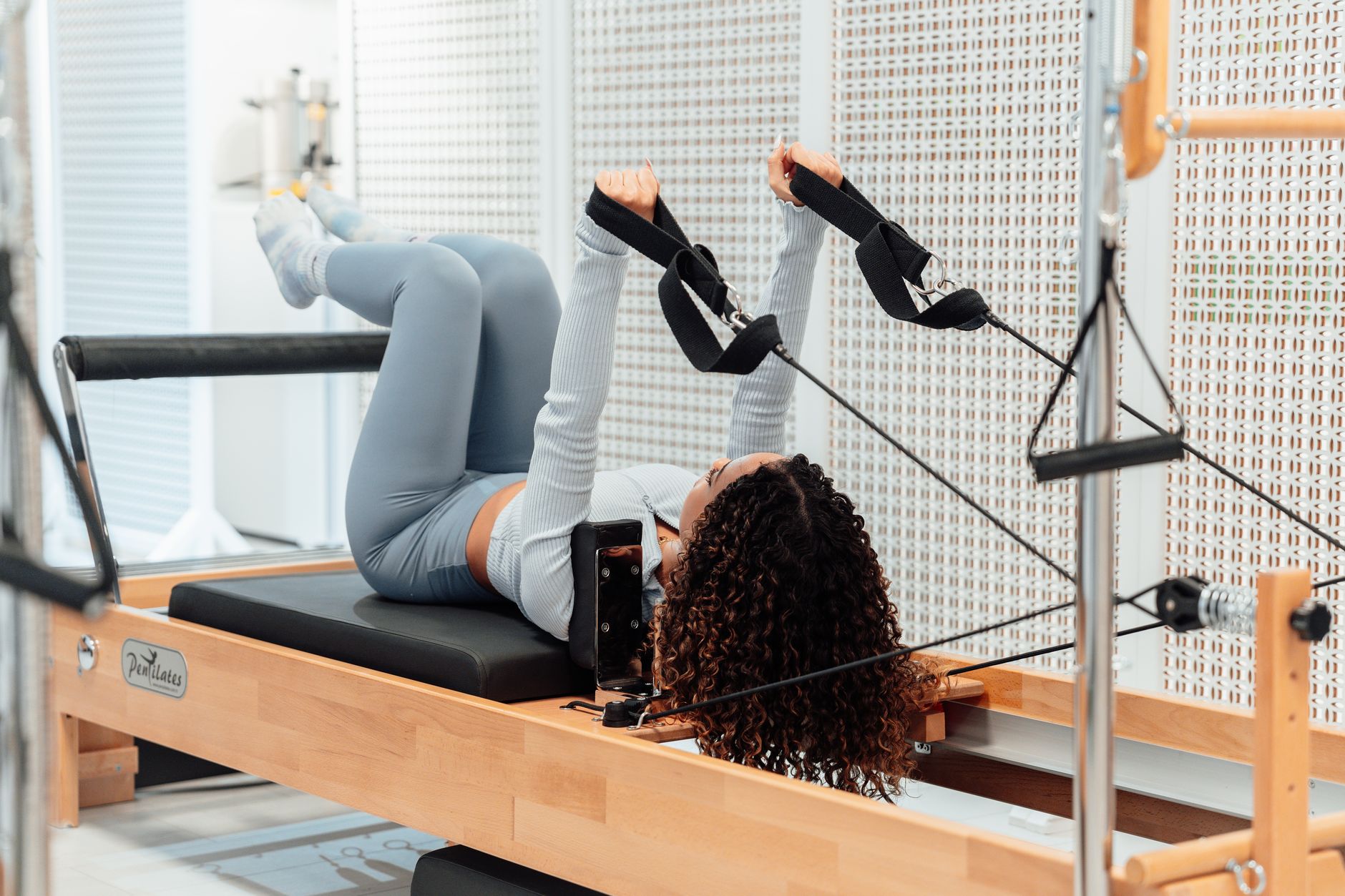
The Long Stretch Series on the Reformer - Long Stretch, Down Stretch, Up Stretch, Elephant, and Long Back Stretch - is not a warm-up and it is not a transition. It is a diagnostic. Every student who has sailed through mat work and then stepped onto a Reformer for the Long Stretch has discovered something they did not expect: the carriage does not lie.
In Long Stretch specifically, the body is in a plank with hands on the footbar and toes hooked over the shoulder rests. The springs provide resistance and, more importantly, feedback. If your hips hike, the carriage tells you. If your scapulae wing, your shoulders tell you. The goal is to move the carriage in and out through a rigid, connected plank - not a rigid, held one. The distinction matters enormously. Gripping the body into stillness and organizing it through genuine proximal stability feel completely different to a trained eye, and after enough repetitions, they feel different to the student as well.
Joseph Pilates placed this series in the order for a reason. By the time a student arrives at the Long Stretch, they have already established breath patterning, spinal articulation, and scapular connection in earlier Reformer work. The Long Stretch demands that all of it be present simultaneously, under load, while the body is horizontal and unsupported. That is a significant ask. It is also why intermediates who rush the order often have a harder time here than beginners who learned the Reformer sequence properly from the start.
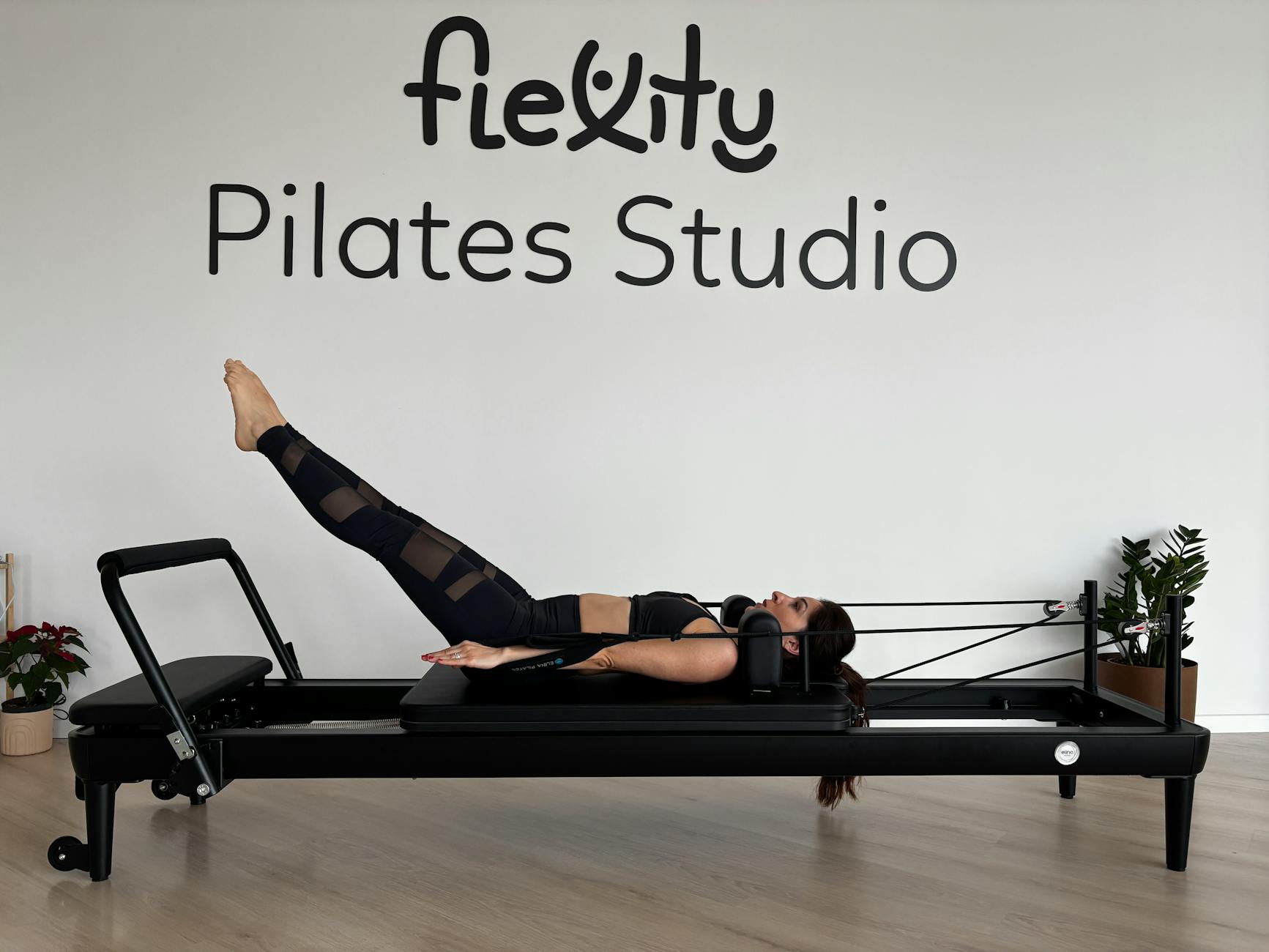
Down Stretch shifts the relationship with the footbar. The hips lower, the spine extends, and the push-through comes from the legs while the chest lifts. It is one of the cleaner places to observe whether a student actually understands spinal extension or is simply compressing the lumbar. The cue to reach the breastbone forward and up - rather than just arching the lower back - tends to reorganize the whole picture.
Up Stretch is the most complex of the three. The pike position at the front, followed by a controlled roll through the spine as the carriage pushes back and then returns, requires hamstring length, abdominal control, and shoulder stability working in sequence. Students with tight hamstrings will rush the roll-down. Students with weak abdominals will collapse at the hips on the return.
The series as a whole is not advanced because it is difficult to perform. It is advanced because it is difficult to perform honestly.