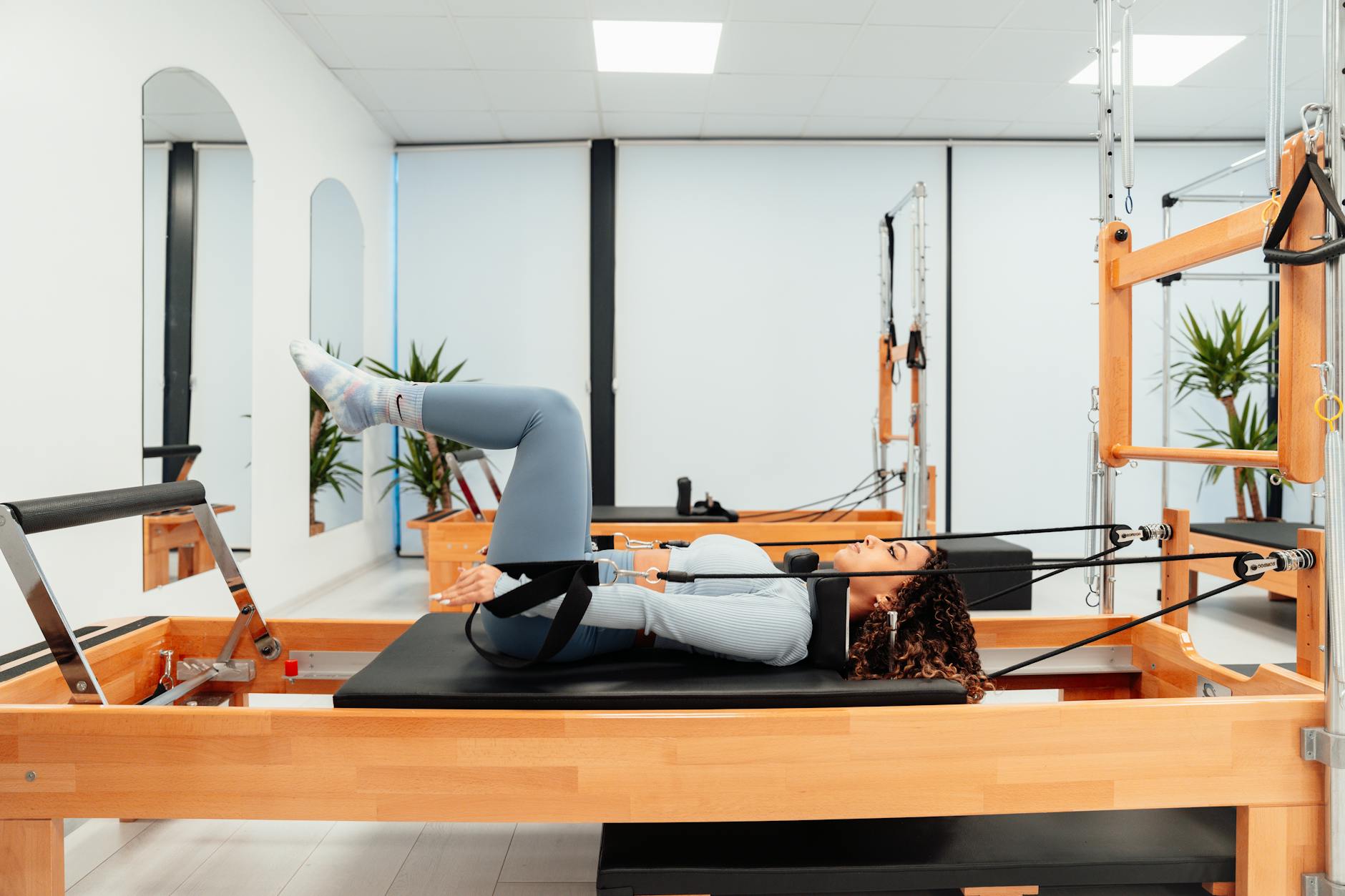
The psoas major attaches to every lumbar vertebra from L1 through L5, and to the last thoracic vertebra, T12. It runs through the abdominal cavity, crosses the pelvic brim, and inserts on the lesser trochanter of the femur. That path matters enormously - because a muscle that starts at your thoracolumbar junction and ends at your inner thigh is not simply flexing your hip. It is compressing, rotating, and laterally stabilizing your lumbar spine at the same time.
Most Pilates cueing treats the psoas as a problem to suppress. “Don’t grip your hip flexors.” “Let the belly button drop.” These are not wrong cues, but they are incomplete ones. They address the psoas only as a puller of the femur toward the trunk. They miss what it is doing to the vertebrae themselves.
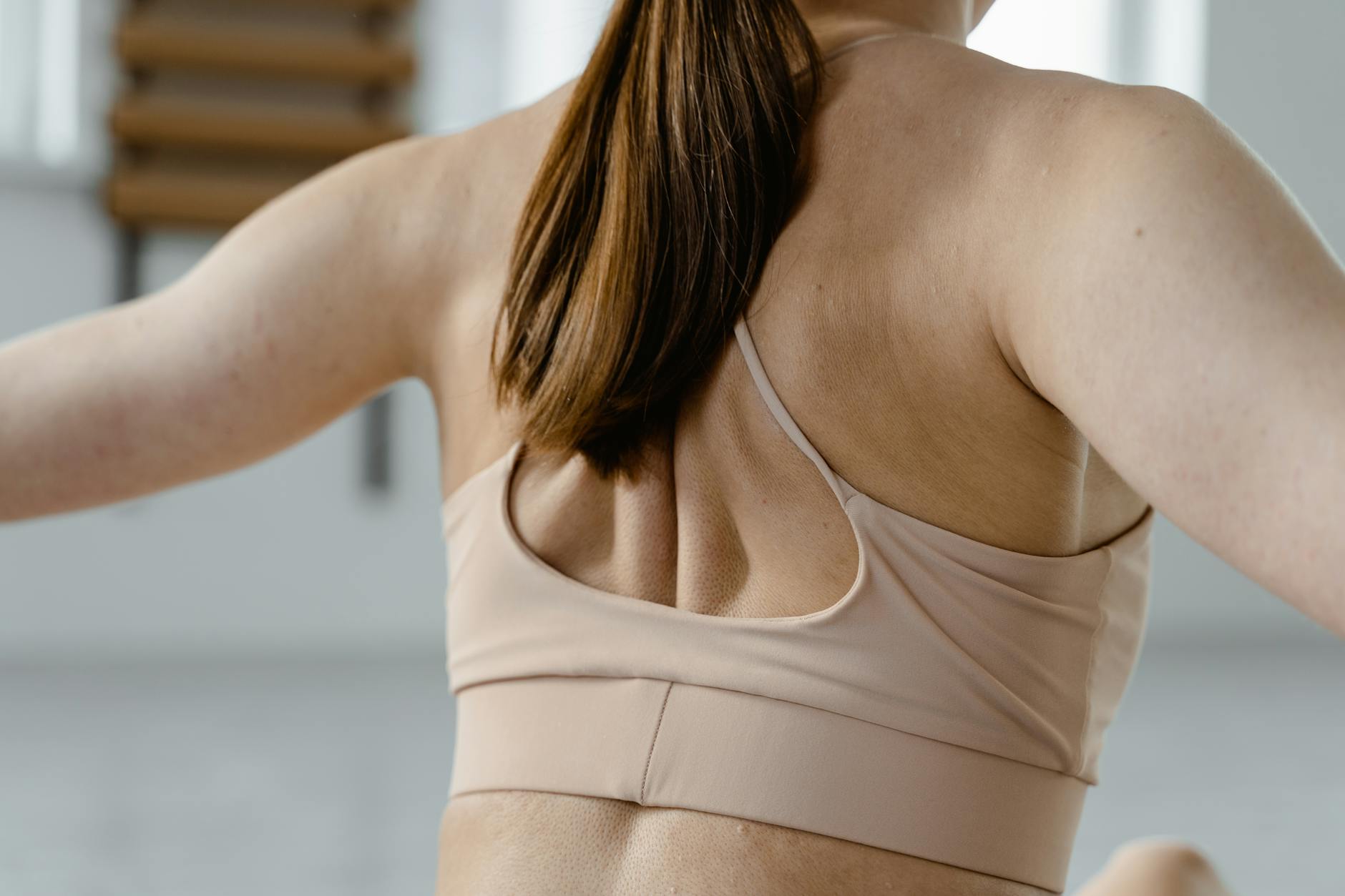
When the psoas contracts bilaterally with the lumbar spine in neutral, it increases axial compression along the lumbar column - which is stabilizing, not harmful, under load. This is the mechanism behind why Double Leg Stretch at proper depth feels controlled in a way that a sloppy version at the same leg angle does not. The difference is not just abdominal engagement. It is whether the psoas is working isometrically against a stable lumbar spine or pulling the lumbar vertebrae anteriorly because nothing gave it a fixed point to work from.
The fixed point is not the pelvis. The pelvis moves. The fixed point is the relationship between intra-abdominal pressure, the deep spinal extensors, and the lumbar vertebrae themselves. If that system is organized, the psoas can do its compression work. If it is not, you get the lumbar hyperextension that looks like a flexibility problem but is actually a load management problem.
This reframe changes what you watch for during Roll Up. The moment most people lose the exercise is not when the feet lift - it is three to four vertebrae before that, when the lumbar spine drops into extension because the psoas no longer has a stable column to compress against. The abdominals did not fail first. The system failed, and the abdominals were never going to save it alone.
Unilateral psoas function is a different problem entirely. Because of its vertebral attachments, a psoas that is tighter or more active on one side will create a lateral draw on the lumbar spine - a functional scoliosis under load that disappears when the client lies down and is completely invisible during assessment. You will see it in Side Kick. You will see one hip hike on the standing leg work. The correction is rarely in the hip.