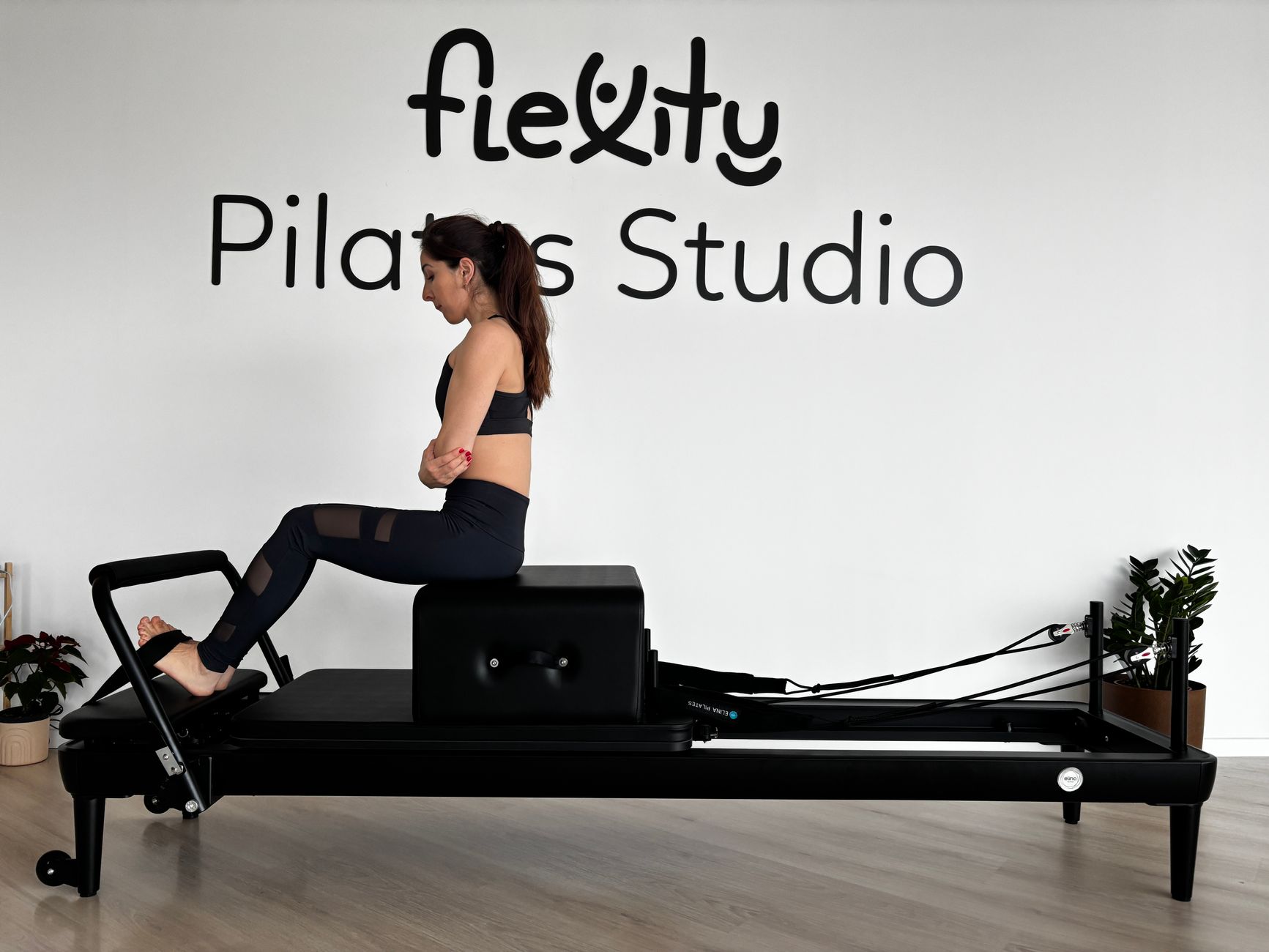
Rib flare is one of those things that does not announce itself. A client walks in, says they slept well, nothing hurts, they feel good. And then they lie down on the Reformer and the bottom of the rib cage lifts away from the mat like a lid coming off a box. That tells me more than the intake form ever could.
The ribs are not a passive structure. They move with every breath, and more importantly, they move in response to how the thoracic spine is organized. When the mid-back is extended past neutral - or when the lumbar spine is compensating for a restricted thoracic - the rib cage tips forward and up. The person usually does not feel it. They feel “fine.” But the deep abdominal canister is already working at a disadvantage before the first footwork repetition.
What Rib Position Tells Me About Injury Risk
A flared rib cage changes the mechanical relationship between the pelvis and the spine. The rectus abdominis shortens at its superior attachment, the linea alba comes under uneven tension, and the transverse abdominis loses its optimal angle of pull. None of this is dramatic on its own. But repeat it across weeks of training without addressing it, and the load starts going places it should not - usually the lumbar spine, sometimes the SI joint, occasionally the shoulder complex when arms go overhead.
This is not a flexibility problem. It is a resting organization problem. And it shows up most clearly in breath.
The Lateral Breath Cue Is a Diagnostic, Not Just a Technique
When I cue lateral expansion of the rib cage - breathing wide into the sides and back rather than lifting the chest - I am watching to see whether it is physically available. Some clients can access it immediately once the pattern is named. Others have so much habitual anterior chest breathing that the ribs barely move laterally at all. That restriction means the intercostals are underused, the accessory neck muscles are doing too much, and the postural default is load-bearing in exactly the wrong tissues.
The classical breath cue is not decorative. Joseph Pilates connected breath to every movement in the system deliberately. When I use it as a diagnostic, I can see within the first five minutes of a session where the body is bracing, where it is collapsed, and where it is compensating for something the client has stopped noticing.
If you want to understand why a particular exercise is not progressing, or why something feels off without a clear point of pain, start with the rib cage at rest. It is rarely silent.