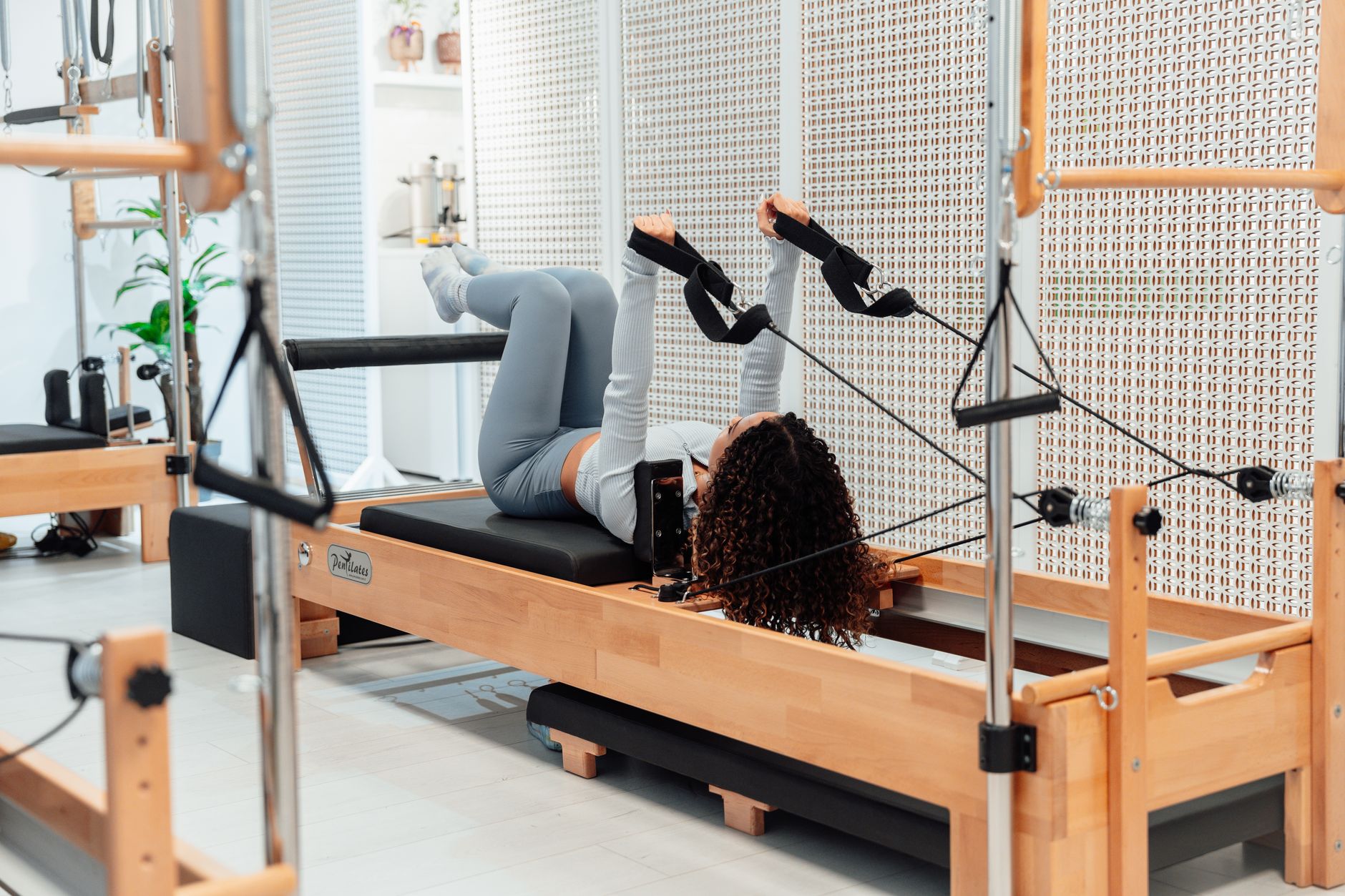
If your shoulders climb toward your ears the moment your arms go up, the serratus anterior is probably not doing its job. This is not a shoulder problem. It is a scapular stability problem, and those are not the same thing.
The serratus anterior originates along the lateral surfaces of ribs one through eight and inserts along the medial border of the scapula - the edge closest to the spine. Its primary job is to hold that medial border flat against the ribcage and to upwardly rotate the scapula as the arm elevates. Without that upward rotation, the glenohumeral joint runs out of room before the arm reaches full height. The shoulder impinges. The trapezius compensates. The neck takes the blame.
This is why “pull your shoulders down” is often the wrong cue, or at least an incomplete one. Depressing the scapula against an elevating arm works against the mechanics of overhead movement. What you actually need is a serratus that is active enough to keep the scapula moving with the arm rather than floating away from the ribcage entirely.
Where This Shows Up in Classical Work
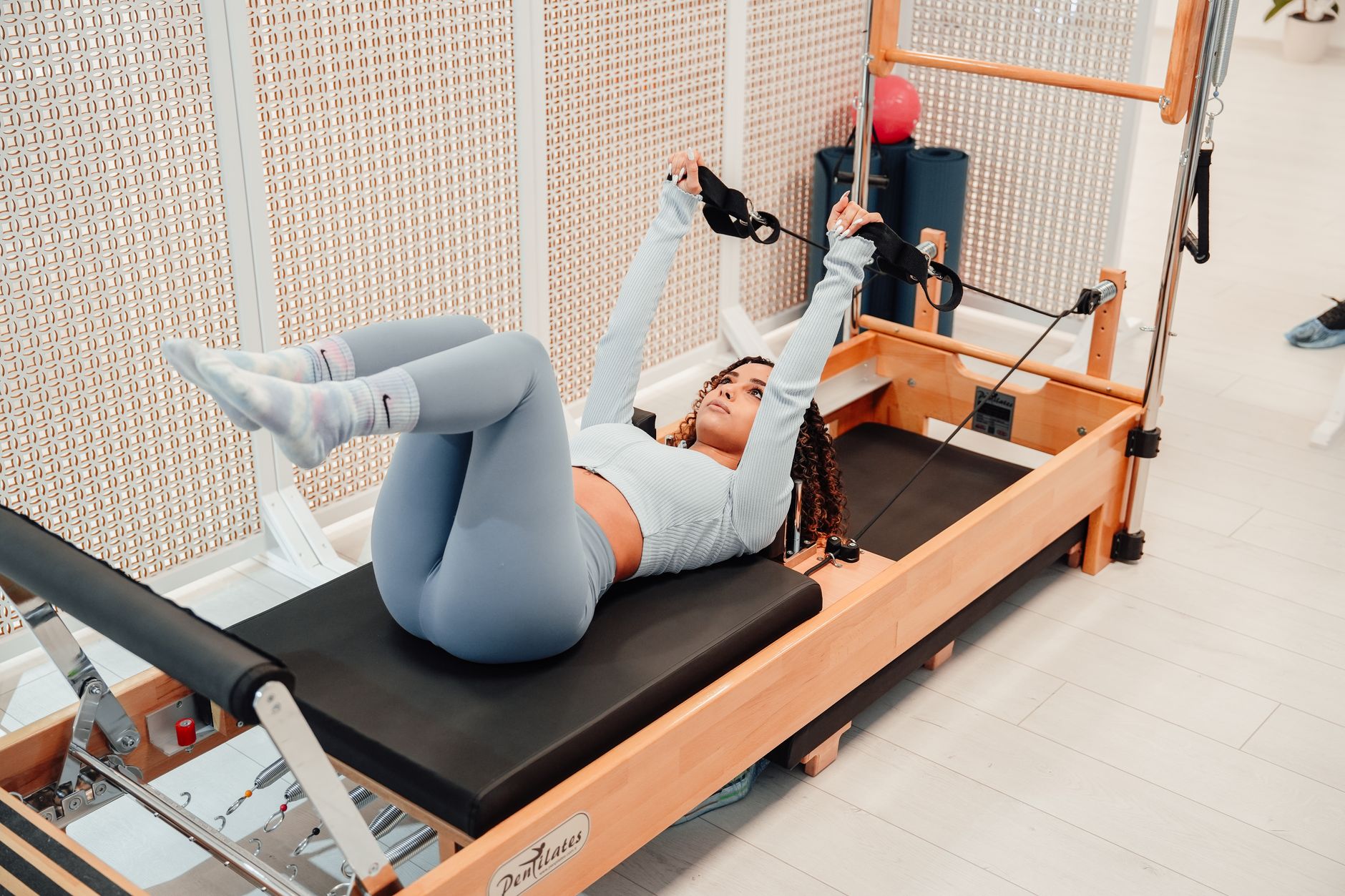
Arm Springs on the Cadillac are a direct test of serratus function. When the springs go overhead and the medial border of the scapula wings - lifts away from the ribs - that is the serratus failing to maintain contact. The movement looks like a shoulder problem. It feels like a shoulder problem. But the fix is not in the shoulder; it is in learning to press the scapula into the ribcage while the arm moves away from it.
The same pattern appears in Pulling Straps on the Reformer, in any variation of the Rowing series, and in Mat work like the Overhead. Each of these exercises requires the scapula to upwardly rotate and stabilize simultaneously - a coordination demand, not just a strength one.
What Serratus Weakness Actually Feels Like
In practice, it presents as a sensation of effort concentrated in the upper trapezius and neck. The arms feel heavy. Overhead range feels restricted even when passive flexibility is adequate. Clients often describe it as “not knowing where their shoulder blades are” during arm work, which is accurate - proprioception in the serratus is genuinely poor in people who have not trained it.
A useful cue for waking it up: think about spreading the back of the ribcage wide as the arms rise. Not forcing the shoulders down, not squeezing the shoulder blades together - spreading laterally, so the scapulae have something to move against.
The serratus anterior is not a glamorous muscle. It does not get named in common fitness vocabulary the way the lats or the rotator cuff do. But in any Classical exercise that asks the arms to go overhead, it is the structure holding the whole arrangement together. When it is not working, everything above the mid-back reorganizes to compensate - and that reorganization is exactly what shows up as chronic tension in the neck and upper shoulders that no amount of stretching resolves.