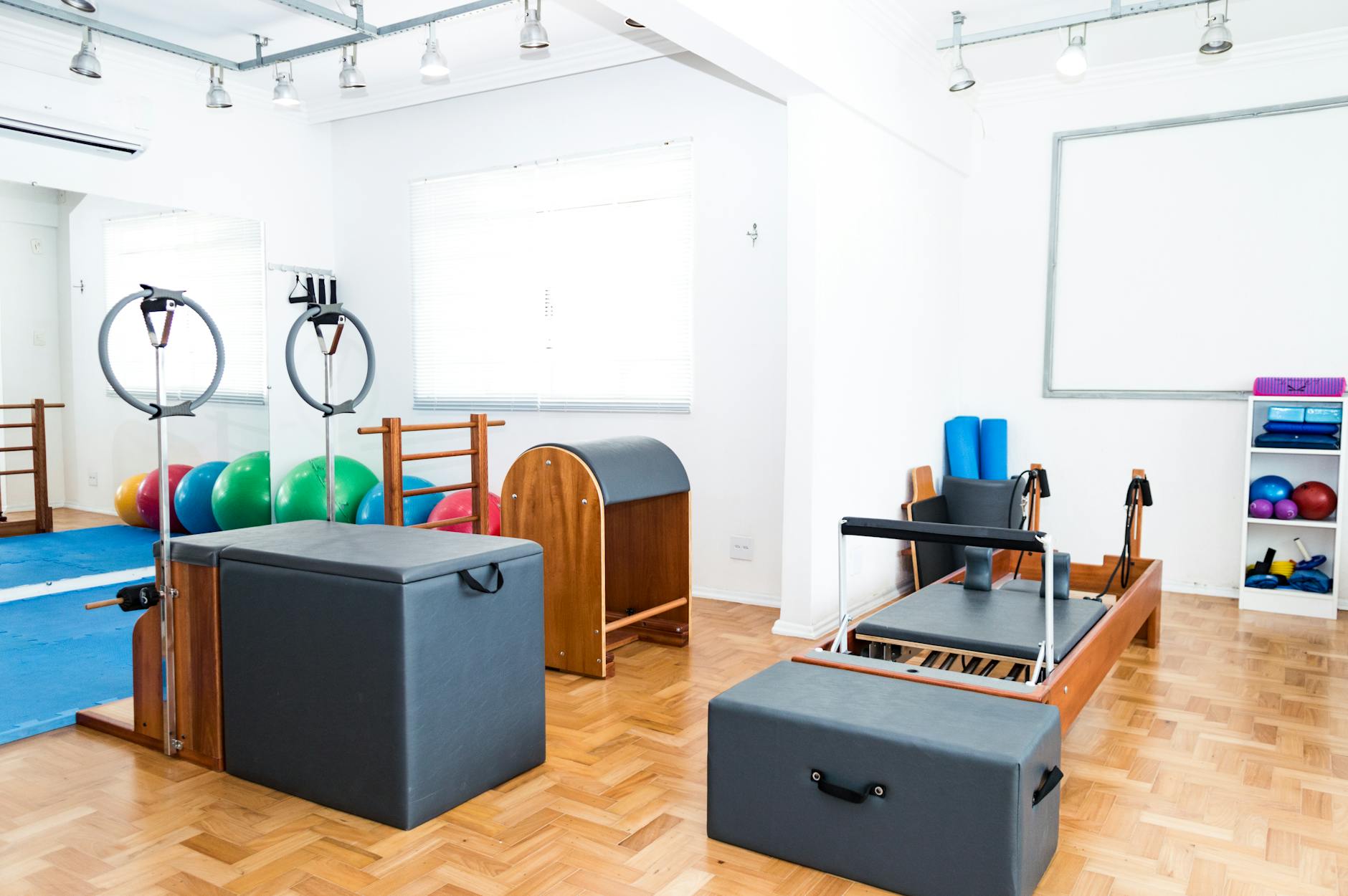
The Short Box Series sits mid-session on the Reformer, after the Footwork, after the Hundred, once the body is warm. Students often treat it like a rest stop. It is not.
Sitting upright on the box with feet hooked under the strap, you have no springs to lean into, no carriage moving beneath you. The apparatus is suddenly just a platform. What you do with your spine from there is entirely on you.
What the Series Actually Demands
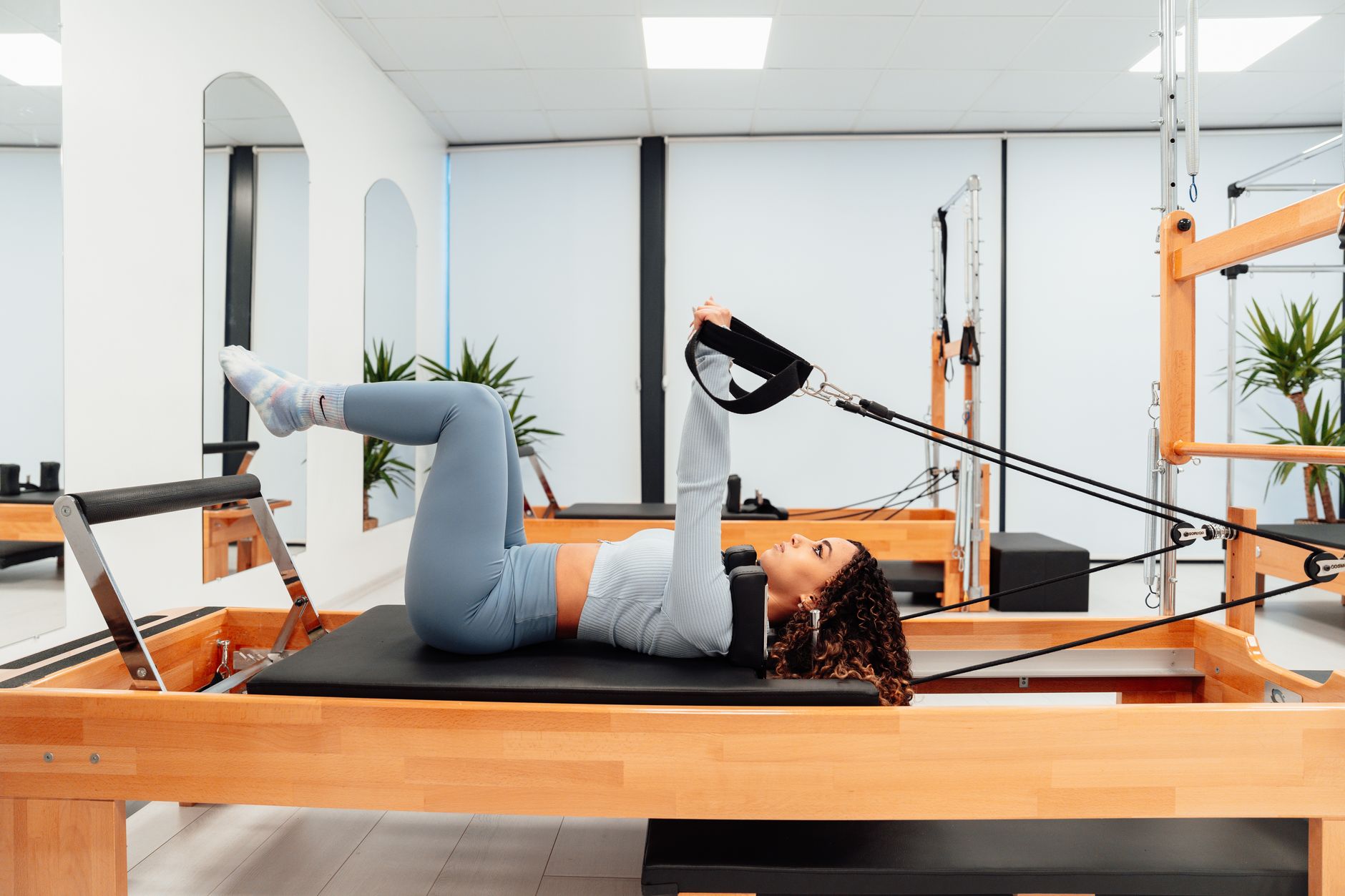
The Short Box includes Round Back, Flat Back, Side-to-Side, Twist and Reach, and Tree - each targeting spinal mobility in a different plane. Round Back asks for a posterior pelvic tilt and a deep C-curve while maintaining axial length. Flat Back demands the opposite: a neutral-to-extended spine held isometrically against gravity while hinging back. These are not decorative variations. They train the spine to move and resist movement, sometimes within the same exercise.
Tree, often the final movement in the series, combines hip flexor lengthening with spinal flexion and a controlled roll-down. It is one of the cleaner tests of hamstring flexibility and lumbar articulation working together that Classical Pilates offers.
Where Most People Fall Apart
The most common error in Round Back is gripping through the hip flexors to stay upright instead of using the abdominals to support the curve. The result looks like a C-curve but functions like a collapse. The box reveals this immediately - there is nothing to brace against.
In Flat Back, the tendency is to hyperextend through the lumbar spine rather than lengthen through the crown of the head and maintain a true neutral. Joseph Pilates called for opposition in the body constantly, and Flat Back is one of the clearest demonstrations of that principle: reaching the crown forward and up while the sit bones anchor down.
Side-to-Side is underestimated. Lateral flexion of the spine is undertrained in almost every other context, and this exercise isolates it directly.
Why It Belongs in the Order It’s In
Classical Pilates is sequential. The Short Box Series appears where it does because the body is ready for it - warm enough to articulate, not yet fatigued. Moving it around in a session, or skipping it to get to Stomach Massage faster, changes what the body learns.
The box is small. The work on it is not.