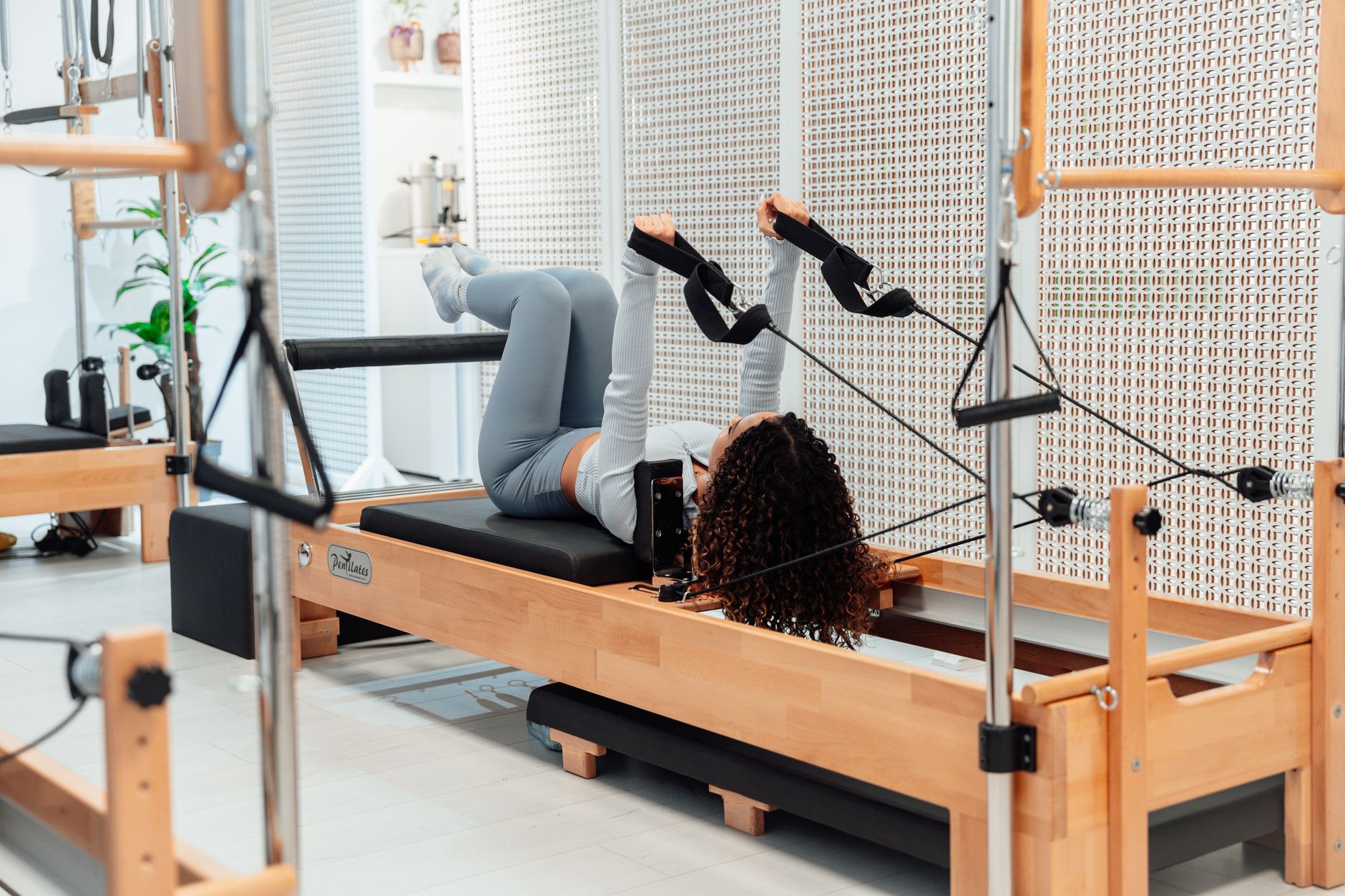
The Snake sits near the top of the Classical Reformer repertoire for a reason that has nothing to do with how it looks. It looks like a contortion. It functions like a full-body audit.
Most people encounter it and immediately frame it as a flexibility exercise — something earned by open hips and a long spine. That framing is wrong, and it costs them the exercise entirely.
Flexibility gets you into the shape. Strength is what makes it mean something.
What the Exercise Actually Requires
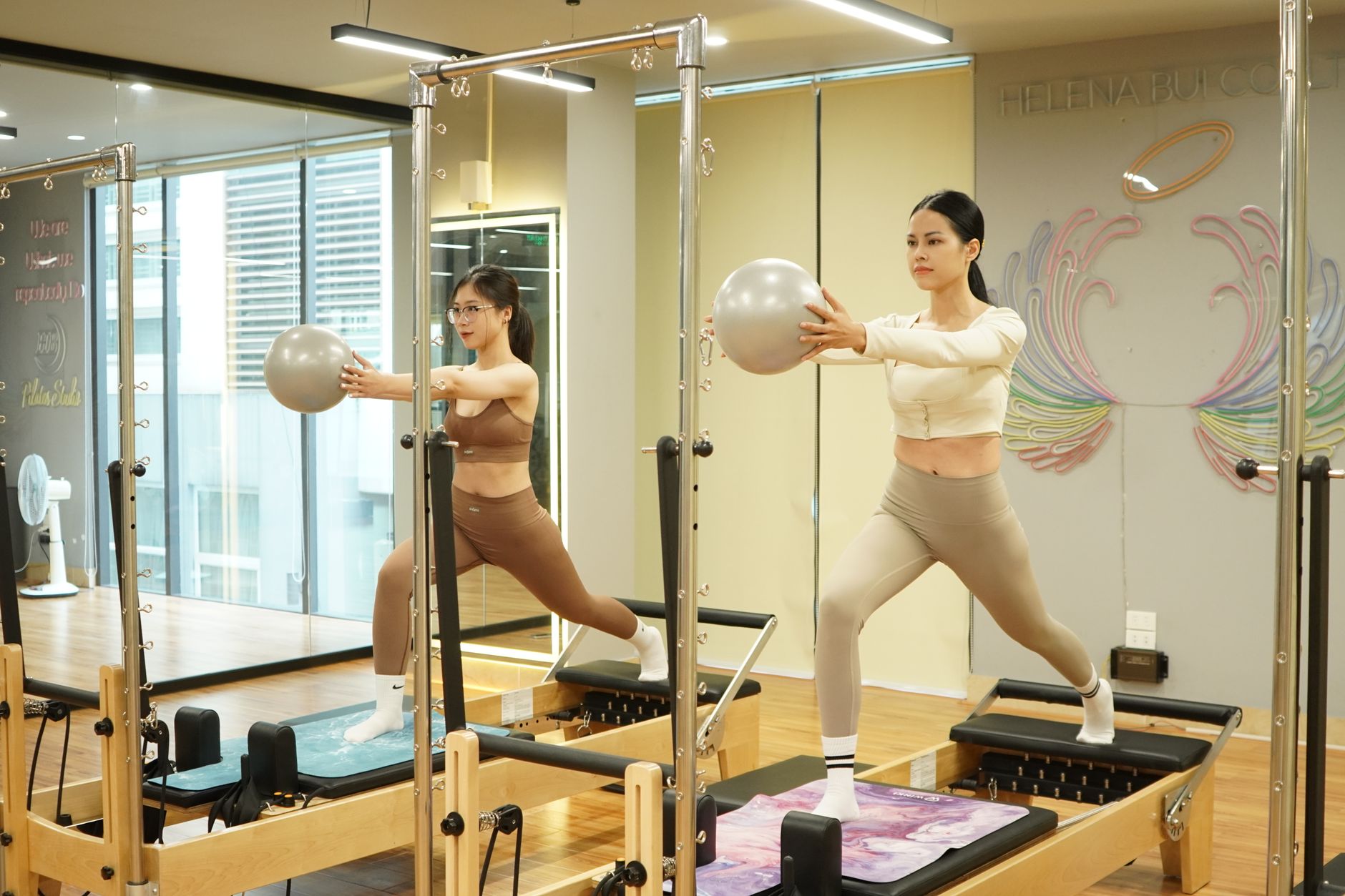
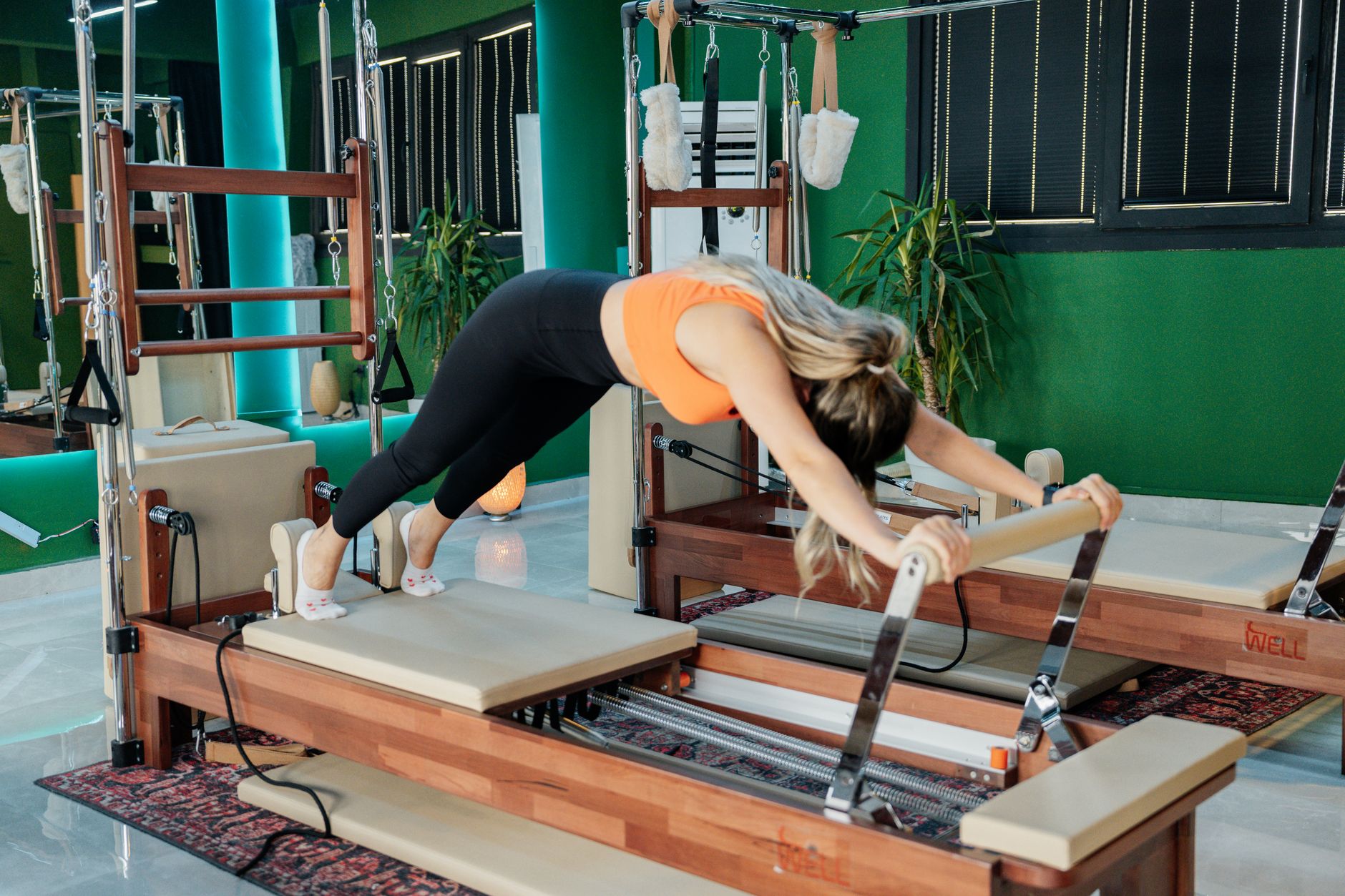
The Snake begins in a side-facing position on the Reformer, feet stacked on the footbar, hips high, body in a twisted plank. From there, the carriage moves out as the hips lower, the spine extends, and the whole system opens — then reverses. The return is where most of the work lives.
What holds that movement together is not hamstring length or spinal rotation range. It is the obliques, the deep hip stabilizers, and the shoulder girdle working in concert to keep the movement from collapsing into the path of least resistance. The path of least resistance, in this case, is usually the lumbar spine taking on load it was never meant to carry here.
In Classical training, the Snake is typically introduced after the Long Stretch Series and the Side Splits are solid. That sequence is not arbitrary. The shoulder stability and lateral hip control developed in those exercises are prerequisites, not suggestions.
Where It Goes Wrong
The most common failure pattern: the hips drop too early on the way out, and the lower back compresses instead of lengthening. The student feels a stretch in the hip flexors, decides that counts, and moves on. It does not count.
The second pattern is subtler. The return - the pike back to the start - gets rushed. Students push through the footbar without first establishing the abdominal connection that should lead the movement. The carriage slides in and the body just rides it. That is not the exercise.
Spring resistance matters here more than people acknowledge. Too light, and there is nothing to work against on the way out. Too heavy, and the return becomes a grind that bypasses the control entirely. In our studio, we treat spring selection on the Snake as part of the teaching, not an afterthought.
What Correct Execution Reveals
When the Snake works - really works - it shows you the relationship between rotation and extension in a way very few exercises can. The thoracic spine has to both rotate and extend simultaneously, which is exactly what it is designed to do and almost never asked to do in daily movement.
Students who have done serious work on the Short Box Series and the Spine Corrector tend to find the Snake more accessible, not because those exercises stretch the same tissues, but because they teach the spine to be active rather than passive through a range. That distinction is the whole point.