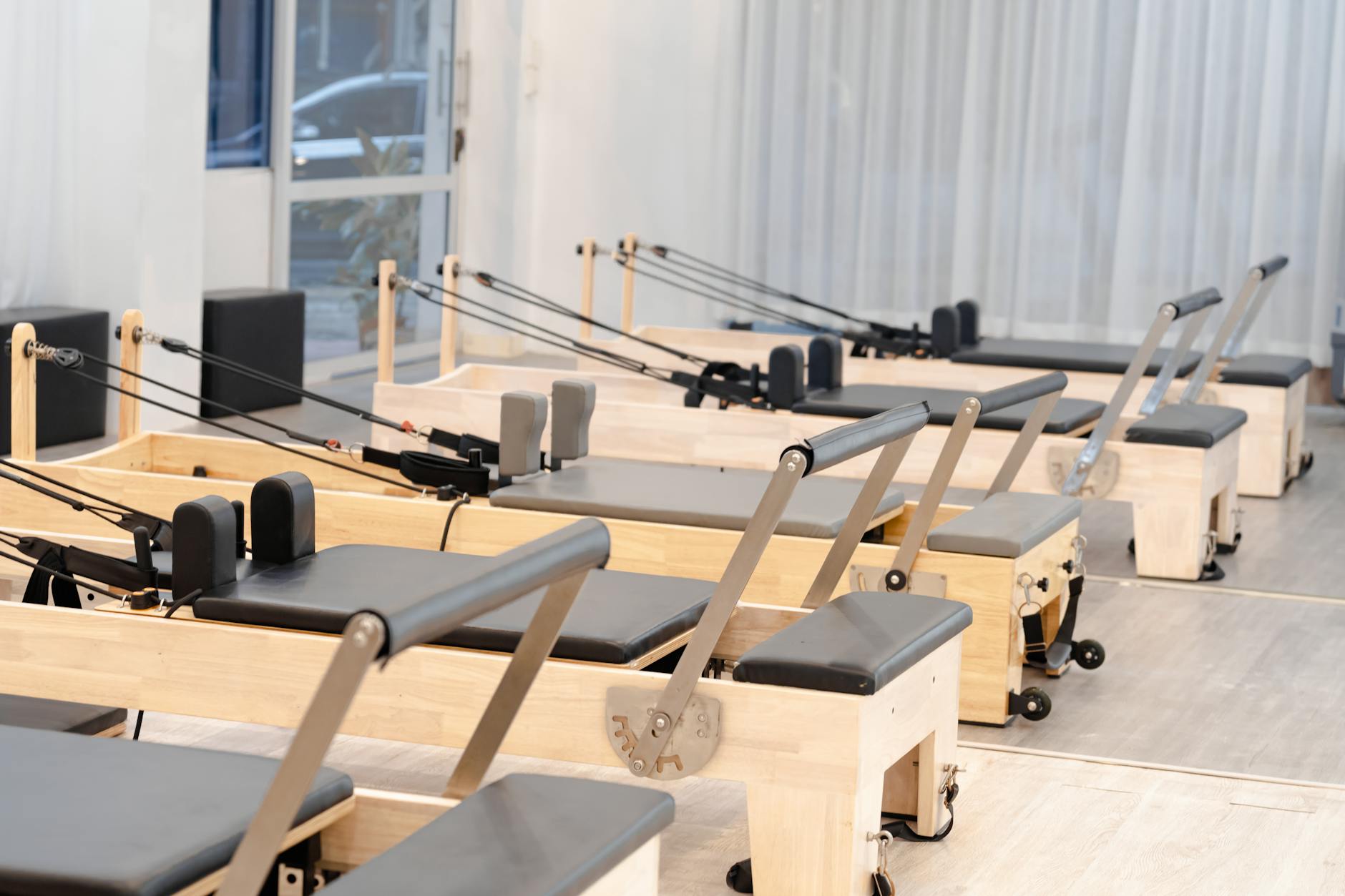
Most people treat the Stomach Massage series as a bridge between more interesting things. It sits in the middle of the Reformer order, it looks repetitive, and because you’re seated rather than prone or supine, it doesn’t carry the same visual drama as the Long Stretch or the Short Box. That’s a mistake.
The Stomach Massage exists to teach you what your spine is supposed to do when you sit - which is to say, it teaches you something most people have completely lost.
What the Exercise Actually Demands
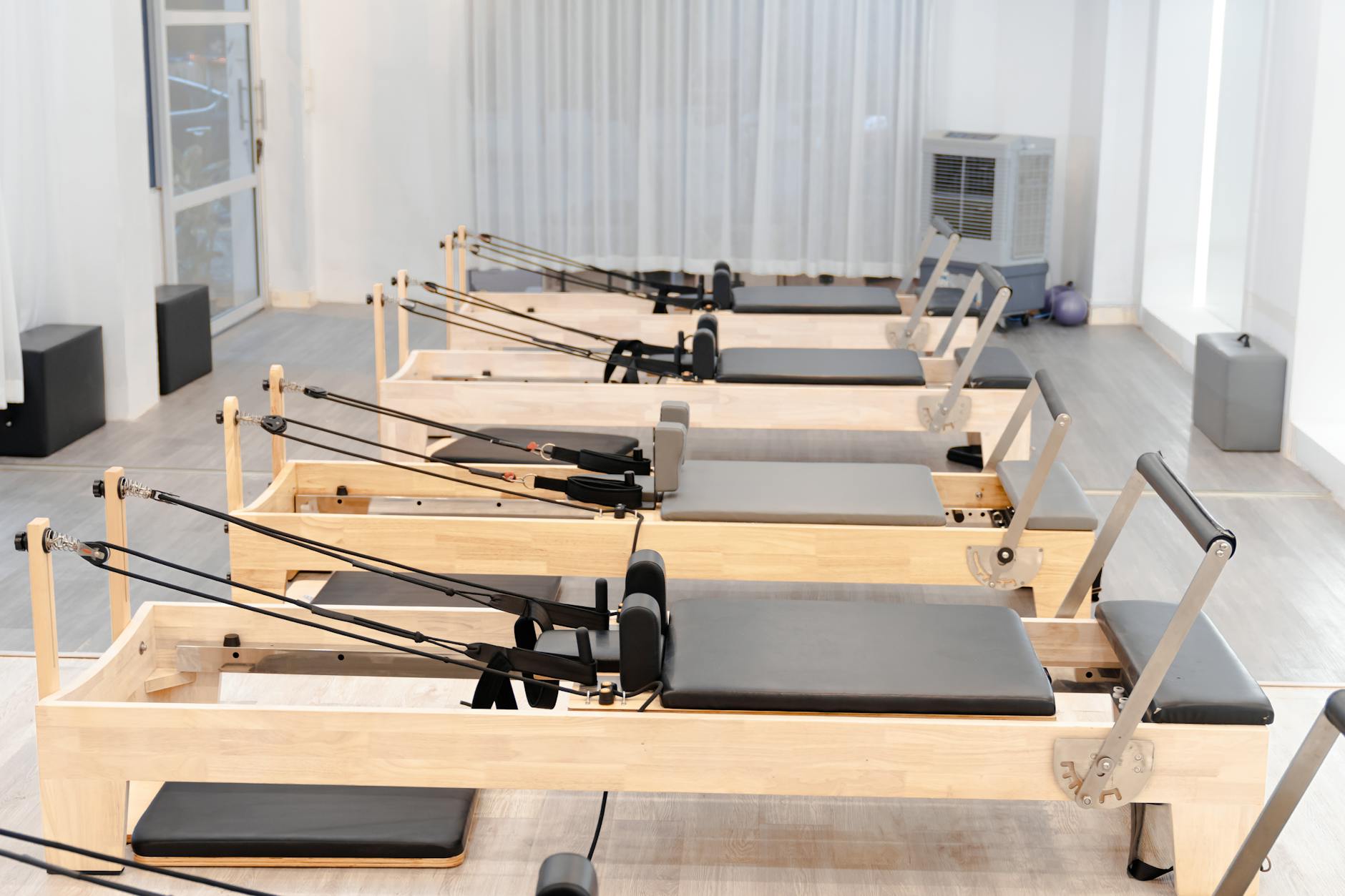
You start seated at the front edge of the carriage, heels on the footbar, knees drawn toward the chest, spine in a deliberate C-curve. Not a collapsed slump. Not a tucked pelvis as compensation for tight hip flexors. A real, controlled flexion through the lumbar and lower thoracic spine, with the abdominals actually doing the work of holding that shape against the spring load.
Then you push out.
The carriage moves away from the footbar, and suddenly every instinct you have wants to let the spine release, to let the hip flexors take over, to straighten up and coast. Classical Pilates doesn’t let you coast. The C-curve holds. The abdominals don’t rest between repetitions. The whole point is that the shape you built at the start is the shape you maintain under load, through movement, while your legs are working.
That’s a significant ask.
The Round, Flat, and Twist Variations
The series progresses - Round, Flat, Twist - and each variation isolates a different relationship between the spine and the working legs.
Round keeps you in flexion throughout. Flat asks you to transition from C-curve to a long, neutral spine as the carriage extends, which requires the thoracic extensors to fire without yanking the lumbar into hyperextension. Twist adds rotation, and this is where most people reveal exactly how much of their rotation has been coming from the shoulder rather than the mid-back.
The Twist in particular has an honesty problem. Watch someone do it who hasn’t been taught well: the shoulder drives across the body, the spine barely moves, and what looks like rotation is mostly an arm gesture. Taught correctly, the rotation initiates from the obliques and travels through the thoracic spine. The shoulder follows. It arrives last.
Why Sitting Matters
The Stomach Massage series builds the specific strength required to hold the spine upright and articulate while the lower body is loaded - which is, structurally, what sitting under any real demand requires. Office chairs have made this feel optional. It isn’t.
If your C-curve collapses on the first push-out, that’s information. If your spine pops into extension the moment your legs straighten, that’s information. If you can hold the shape through all three variations without the carriage bouncing, without the feet gripping the footbar for dear life, without the shoulders creeping toward the ears - then you’re beginning to understand what the exercise is for.