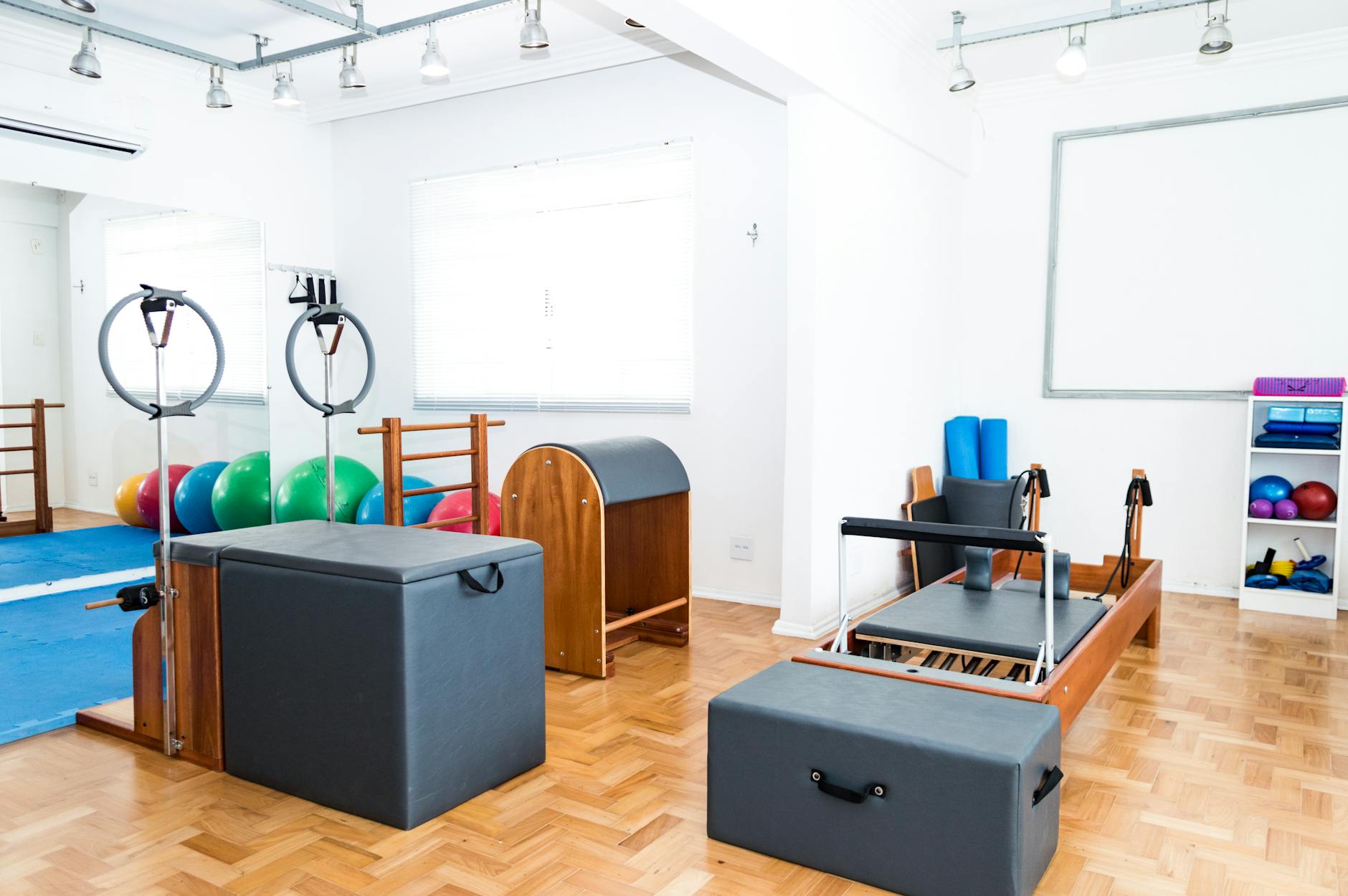
Most people who have done Classical Pilates know Swan from the mat - the prone extension with the hands under the shoulders, the long spine, the opposition of the legs pressing down while the crown lifts. It’s a foundational exercise. It teaches extension sequencing, scapular stability, and the relationship between the abdominals and the back extensors.
Then you put someone on the Spine Corrector barrel and ask them to do Swan, and everything they thought they understood disappears.

The barrel changes the geometry immediately. Prone on the mat, the pelvis is grounded. The floor gives feedback - you can feel if the hip bones are digging in, if the legs are gripping, if the lower back is taking over too early. The mat is honest in a blunt way.
Draped over the barrel, the pelvis is now elevated and unsupported in a different sense. The curve of the barrel encourages thoracic extension by meeting the spine where it is, but that same curve also exposes any segment that refuses to move. A stiff mid-back doesn’t hide on the barrel. Neither does excessive lumbar mobility that’s been compensating for thoracic restriction for years.
The setup matters: hips at the top of the barrel, legs long and together, hands on the front handles or the floor depending on the specific variation. The position itself is already asking something of the body before a single repetition begins. This is not a passive placement.
The movement starts low. The pubic bone maintains contact with the barrel as long as possible while the spine begins to extend from the thoracic region upward. This sequencing is everything. If the lumbar spine fires first - which it will, in most people, for quite a while - the exercise becomes a lower back compression drill and nothing more.
The abdominals do not turn off. This is one of the misunderstandings that follows people from mat work into apparatus work. Extension does not mean abdominal release. The deep stabilizers stay engaged; the erectors and the thoracic extensors do their actual job instead of defaulting to the already-overworked lumbar segment.
Swan on the barrel is where thoracic immobility gets exposed and, with consistent work, addressed. The feedback from the apparatus is specific enough that a practitioner can identify exactly which vertebral level is reluctant to participate.
It’s also where clients begin to understand that extension is not just “bending backward.” It’s a full-spine conversation, and the barrel forces every segment to show up for it.