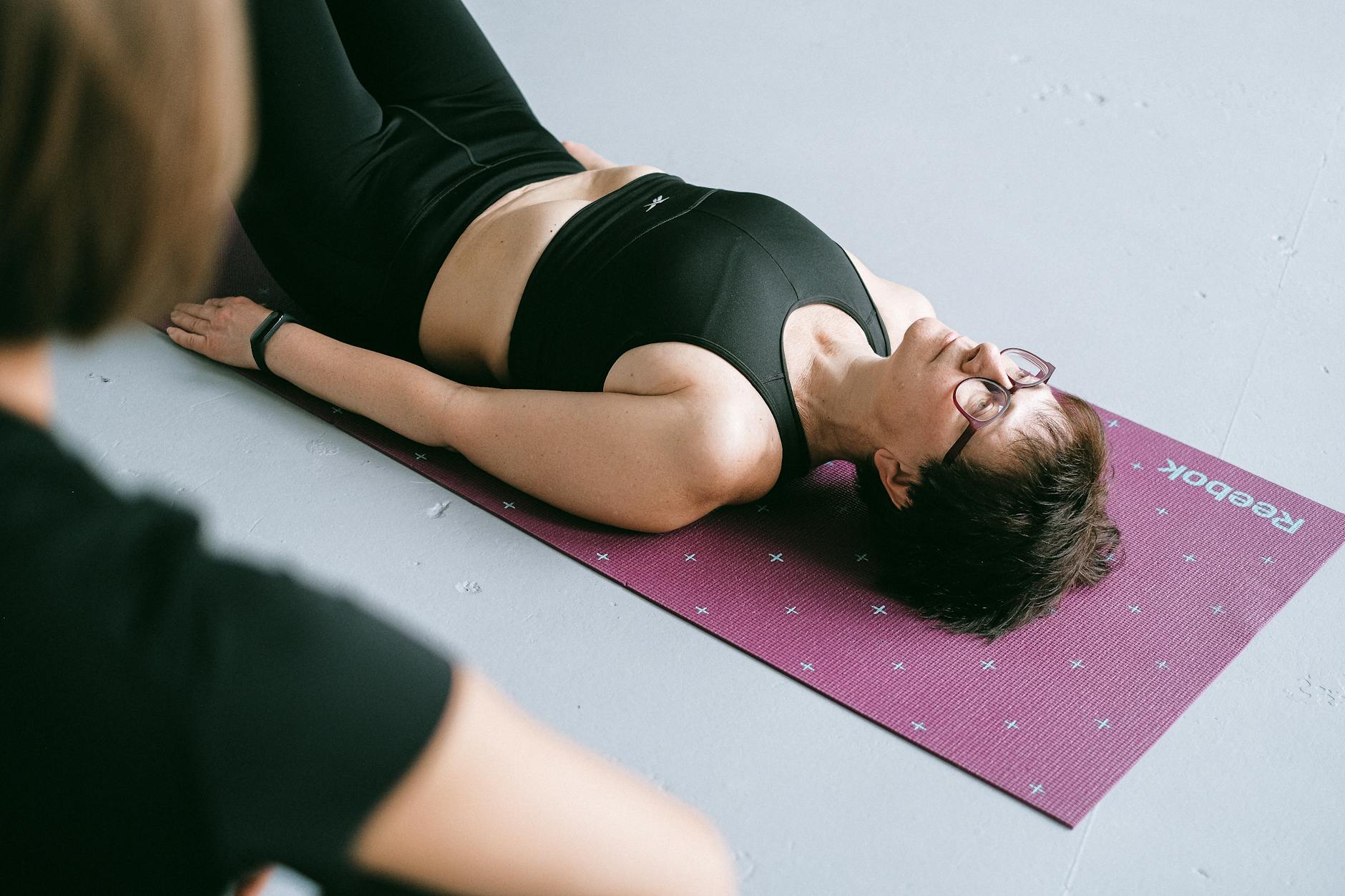
Most people treat the exhale as the passive half of a breath - the release, the reset, the blank space before the next inhale. In Classical Pilates, the exhale is where the work happens. It’s not recovery from the effort. It’s the mechanism of it.
The deep abdominals - specifically the transverse abdominis - respond directly to a full, controlled exhale. When you compress the air out completely, those muscles engage in a way that no amount of “pull your belly button to your spine” cueing can reliably produce. This is why so many Classical exercises are structured around the exhale coinciding with the hardest part of the movement: the curl in the Roll Up, the press in Single Leg Stretch, the beat in the Swan.
If your breath timing is off, your body is compensating somewhere. Usually the neck, the hip flexors, or the low back.
From an injury prevention standpoint, this matters more than most people realize. The spine relies on intra-abdominal pressure for stability during loaded movement. A shallow or held breath during exertion drops that pressure at exactly the wrong moment. You’re asking the vertebrae and their surrounding soft tissue to do a job that the breath-abdominal system was supposed to handle.
This is particularly relevant for clients returning from low back injuries. Relearning the exhale - not the exercise, not the range of motion - is often the first actual step toward safe loading of the spine.
The inhale matters too, but differently. A full lateral rib expansion on the inhale sets the container. It keeps the chest lifted without gripping, creates width across the back, and primes the exhale that follows. Joseph Pilates called it “lateral thoracic breathing,” and he was deliberate about it - the ribs move out and up, not just the belly forward.
Practice it away from the mat first. Sit upright, place your hands on your lower ribs, and breathe into your palms. Then exhale fully - longer than feels necessary. Do that ten times before your next session and notice whether your Hundred feels different.
Breath isn’t the soft, optional part of Classical Pilates. It’s structural. Treat it like an exercise, because that’s exactly what it is.