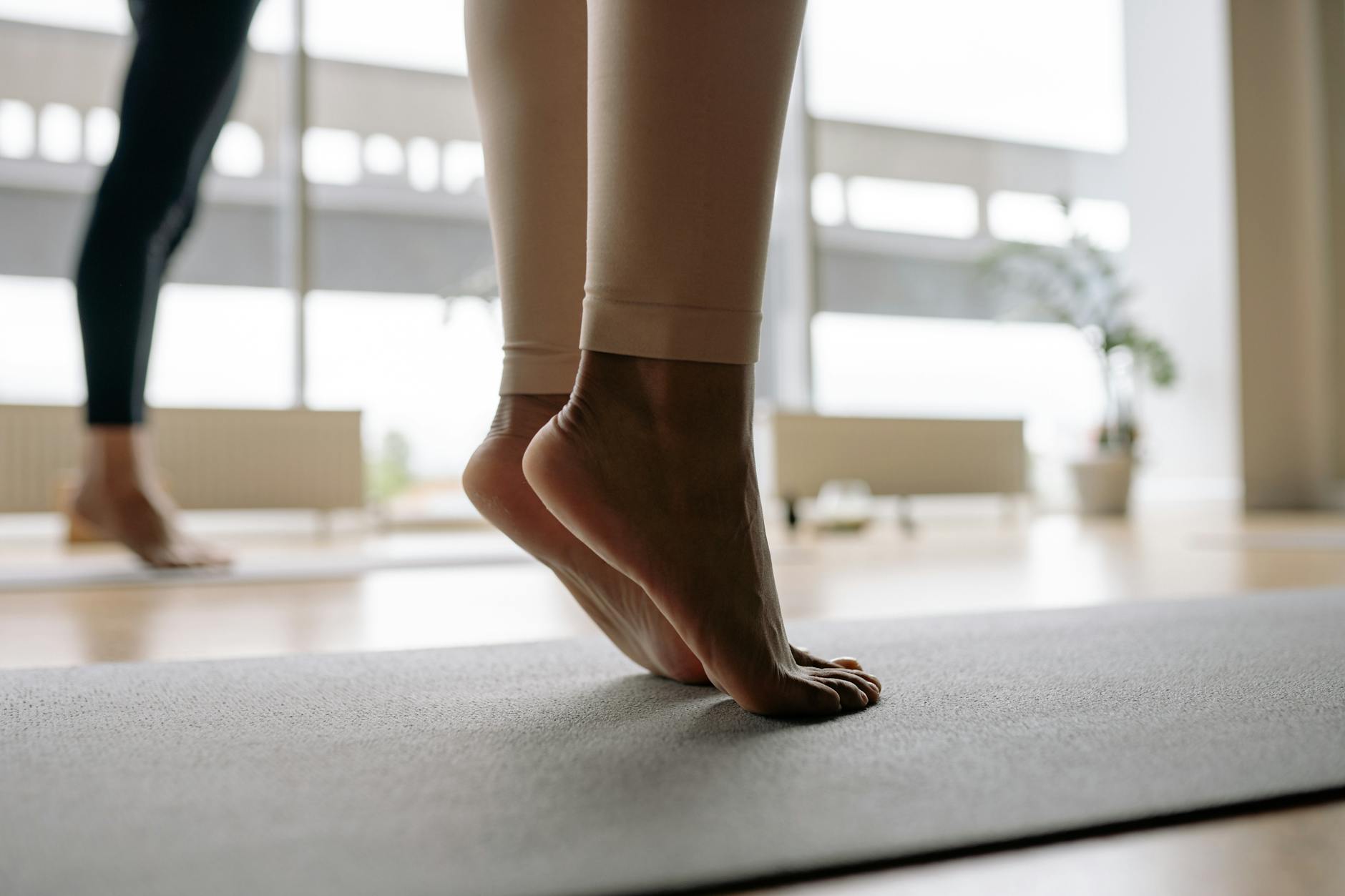
Most people’s first movement of the day is a collapse forward - legs swung over the side of the bed, spine rounded, weight dumping into the front of the feet. It happens before any conscious decision is made. That’s the problem.
The body remembers what you repeat, including the things you do half-asleep.
From a Classical Pilates perspective, recovery and injury prevention don’t begin on the reformer. They begin in the small, unguarded moments when habit takes over from intention. Morning movement is one of the most consequential of those moments.
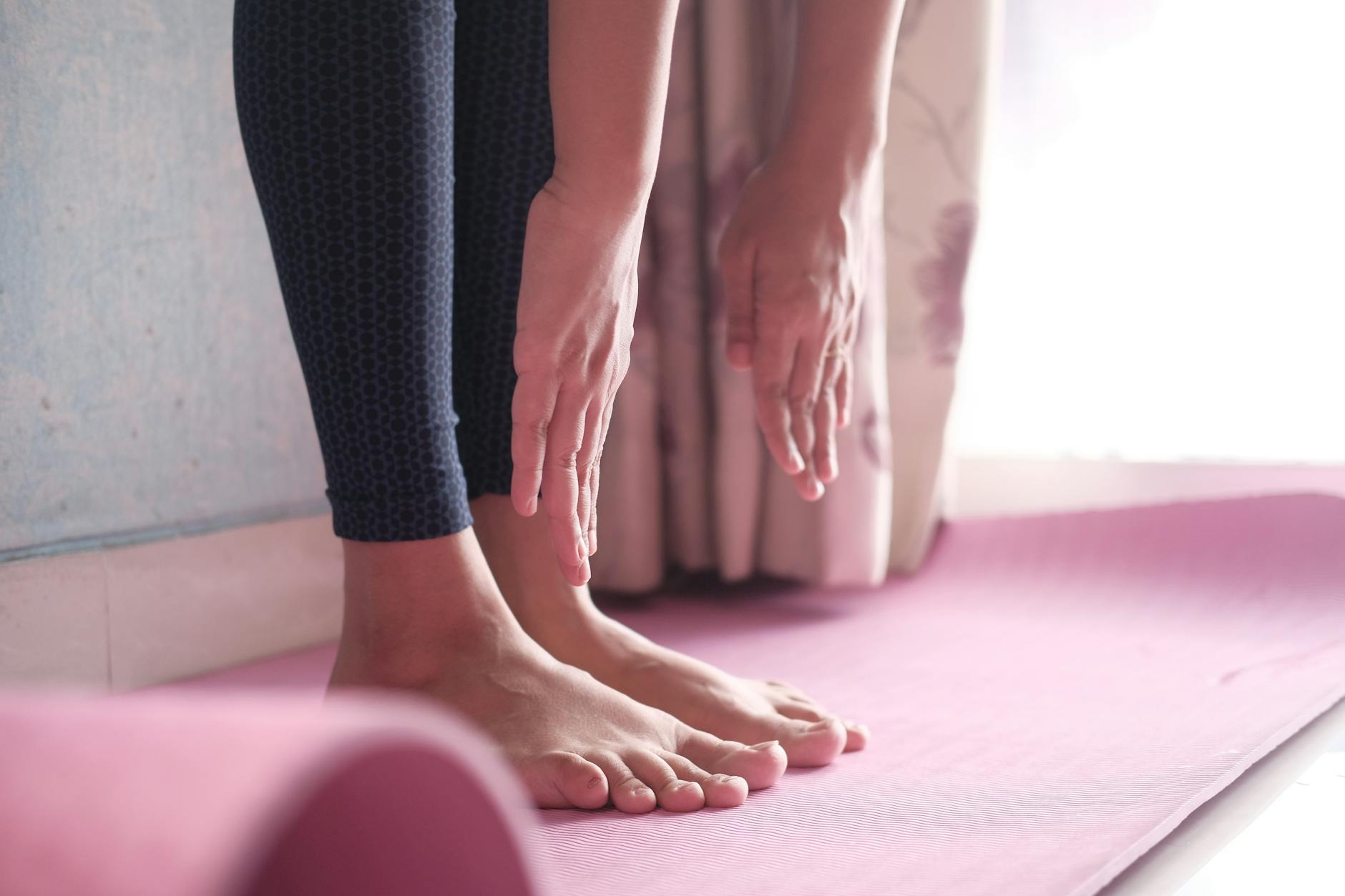
What the Feet Actually Need
The foot has 26 bones and 33 joints. Classical Pilates footwork - particularly on the reformer, starting in Pilates stance at the foot bar - is designed to wake up that architecture deliberately. The ball of the foot, the heel, the space between. When you stand on hard floors immediately after waking, before the intrinsic muscles of the foot have been asked to do anything, you’re asking the larger structures to compensate from the first step.
A short routine before standing matters. Not a full session - just articulation. Point and flex. Ankle circles. Feeling the weight distribute evenly across both sitz bones before the legs take the load.
The Breath Is Already Running
Breathing doesn’t wait for you to be conscious of it, which means the pattern you wake into - shallow, chest-dominant, held - is already influencing your tissue tone and your nervous system before you’ve made a single deliberate choice. The lateral thoracic breath that Classical Pilates emphasizes isn’t just a technique for the studio. Three or four full breaths lying down, with attention to the ribcage expanding into the mat, can shift the quality of everything that follows.
This isn’t relaxation practice. It’s reset.
What This Has to Do With Injury
Repetitive strain in Pilates practitioners - and in clients who train consistently - often traces back not to what happens in a session but to the accumulated loading patterns outside of it. The wrists that bother someone in Long Stretch were probably already braced before they walked in. The hip that catches in Hip Circles was already gripping through the commute.
Morning is when the compensation patterns for the day get established. It’s worth spending two minutes on the floor before you put your weight on your feet.